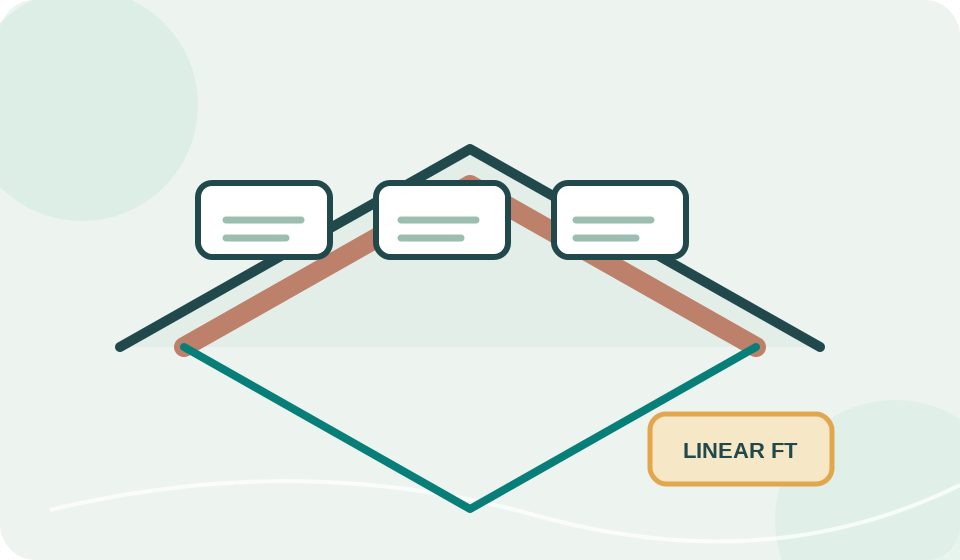

Measure the roof lines that receive cap material
Ridge length follows the horizontal high line where roof planes meet. Hip length follows each diagonal outside corner from ridge toward eave. Add every distinct run that will receive the selected hip-and-ridge product, but do not include eaves, valleys, or ordinary field-shingle courses. A roof sketch with a separate tally for ridge and hip segments makes the input reviewable.
This calculator accepts two totals in feet. Ridge and hip are measured along the intended installation line, not by multiplying roof area or bundle count. If a line turns or is interrupted by a feature, split it into segments during measurement, then sum the applicable lengths before entering the total.
Use installed linear coverage per bundle
The coverage field is linear feet along the roof line. It is not square feet of field-shingle coverage. Manufacturers may list coverage based on a specific exposure, cut pattern, starter treatment, or product configuration. Use the value printed for the actual cap product, and confirm that it applies to both hip and ridge use on your roof.
Installation exposure changes how far each piece covers. A bundle count can therefore differ even when two products weigh similarly or carry similar names. Owens Corning’s hip-and-ridge product document lists lineal coverage per bundle for its product; that is the kind of package measure this field expects. Do not substitute a generic field-shingle square rating.
Apply the allowance and round up
The calculation is N = ceiling[(ridge + hip) × (1 + allowance ÷ 100) ÷ coverage per bundle]. An allowance of 10 percent increases the measured lineal footage by one tenth before the division. The calculator displays combined and allowance-adjusted run to three decimal places, while bundles are an integer because partial packages are not an order quantity.
Rounding happens after the total adjusted run is divided by coverage. For example, 77 adjusted feet at 25 feet per bundle gives 3.08, so the order estimate is four bundles. Do not round the ridge and hip subtotals separately before adding them; doing so can shift a result near a whole-package boundary.
Keep cap material separate from the rest of the roof takeoff
Field shingles cover the main roof planes; hip-and-ridge products cap their intersections. Starter strips, drip edge, underlayment, valley flashing, and nails may use different units and package instructions. Include them as separate line items. The roof shingle bundle calculator estimates field-shingle bundles from sloped roof area and area coverage, which is not the same measure as linear cap coverage.
If the roof includes a vented ridge, the cap product may be installed over a particular vent profile or with a specified fastener layout. Measure only the line that the selected product is designed to cover, then follow its installation document. The calculator does not know the roof system, shingle brand, cap profile, or transition details.
Check exclusions before placing an order
The entered percentage is an optional cutting allowance, not a prediction derived from the roof. Short offcuts, starter pieces, damaged material, and layout changes can affect actual consumption. A simple, continuous line may need less allowance than a roof with many breaks, but a product’s installation rules take precedence over a rule of thumb.
The model does not calculate the geometric length of a hip from a plan, determine which intersections need capping, or verify local code and warranty requirements. It also does not add an allowance automatically beyond the field you enter. Confirm run lengths and per-bundle coverage against drawings, the selected package, and the installer’s material schedule.
Worked examples
Both examples use linear feet for line lengths and product coverage. Whole bundles are rounded upward only after all eligible runs and the entered allowance are combined.
A roof with 42 feet of ridge and 28 feet of hips
Inputs: Ridge 42 ft; hips 28 ft; product coverage 25 linear ft/bundle; allowance 10%.
Calculation: Combined line = 42 + 28 = 70 ft; adjusted line = 70 × 1.10 = 77 ft; 77 ÷ 25 = 3.08; ceil(3.08) = 4 bundles.
Four bundles provide at least the calculator’s 77-foot allowance-adjusted target at the entered coverage rate. Verify the product’s installed exposure before ordering.
A shorter cap run at 28 feet per bundle
Inputs: Ridge 34 ft; hips 18 ft; product coverage 28 linear ft/bundle; allowance 5%.
Calculation: Combined line = 34 + 18 = 52 ft; with 5% = 54.6 ft; 54.6 ÷ 28 = 1.95; ceil(1.95) = 2 bundles.
Two packages cover the rounded estimate. The calculation does not include any separate starter strip or field shingles.
