How to use this calculator
Approximate closed-loop bandwidth from gain-bandwidth product and noise gain for a dominant-pole op amp.
- Enter Gain-bandwidth product (MHz), Noise gain (V/V). Match the units shown beside each field and review the result together with the assumptions below.
- Read the worked example below to check the expected input format and result.
- Compare another scenario by changing one input at a time. Use Reset to return to the starting values.
Single pole op amp closed loop bandwidth explained
A numerical walkthrough
Gain-bandwidth product (MHz) = 10; Noise gain (V/V) = 11.
- Single pole op amp closed loop bandwidth: 909090.909091 Hz
The model behind the numbers
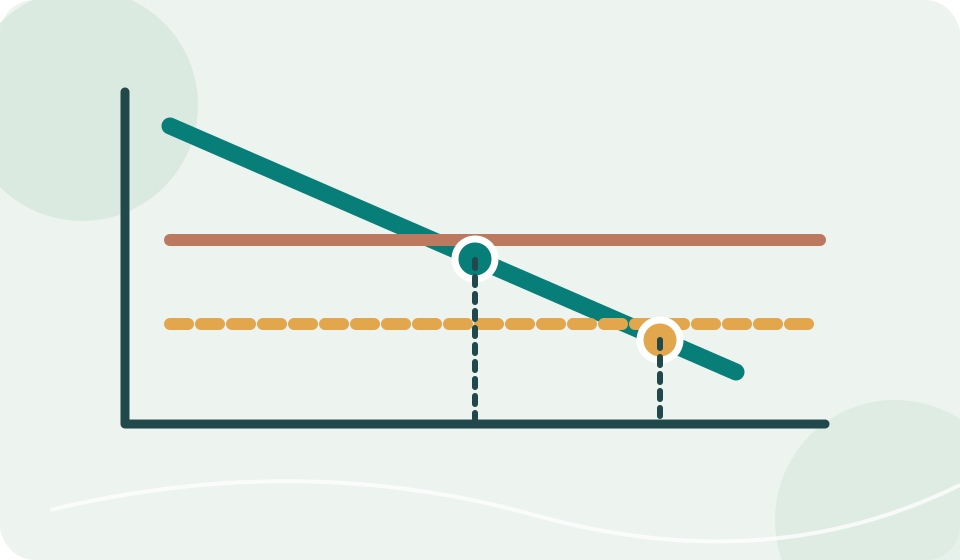
Bandwidth≈GBW/noise gain.
Uses noise gain, which can differ from signal gain in inverting circuits.
What to enter
g— Gain-bandwidth product (MHz)- Gain-bandwidth product (MHz).
n— Noise gain (V/V)- Noise gain (V/V).
Interpreting the result
Uses noise gain, which can differ from signal gain in inverting circuits. Additional poles and loading are excluded.
Assumptions and limits
The estimate assumes a dominant single pole and an approximately constant gain-bandwidth product, using the supplied noise gain. It does not account for slew rate, output swing, capacitive loading or additional poles.
Frequently asked questions
Should I use inverting signal gain?
Use its noise gain, usually one plus the resistor ratio.
Is the estimate exact?
No, it assumes a dominant-pole response.
Does slew rate still matter?
Yes, large signals can be slew limited.
How do I use the Single pole op amp closed loop bandwidth calculator?
Enter Gain-bandwidth product (MHz), Noise gain (V/V). Match the units shown beside each field and review the result together with the assumptions below.
What is a worked example of Single pole op amp closed loop bandwidth?
Gain-bandwidth product (MHz) = 10; Noise gain (V/V) = 11. Single pole op amp closed loop bandwidth: 909090.909091 Hz
Method reference: Texas Instruments analog circuit cookbook.
Read our calculation methodology.