
What Euler’s critical load means
Euler’s equation estimates the ideal elastic load at which a perfectly straight, slender column under concentric compression loses lateral stability: Pcr = π²EI/(KL)² = π²EI/Le². L is the physical length between lateral restraints, K is the effective-length factor for the end-restraint and frame-sway idealization, and Le = KL is the effective length. E is Young’s modulus and I is the second moment of area about the buckling axis. The calculator returns a force magnitude in newtons.
That mathematical critical load is not automatically a real member’s safe resistance. Crookedness, eccentricity, residual stress, yielding, local instability, connection flexibility, and code factors can reduce the design value. Use Euler for trends or a suitable elastic long-column model.
Match units and buckling axis
The calculator fields are modulus in GPa, second moment of area in cm⁴, physical member length L in metres, and effective-length factor K. Each must be positive. E describes the material’s elastic stiffness under the relevant temperature and orientation. I is a geometric property about the axis of lateral bending; for an asymmetric section, check both principal axes and use the governing direction.
The calculator’s input is labelled “Effective length (m),” but its runtime multiplies the entered value by K. In the notation used here, enter the physical unsupported length L and let the calculation form Le = KL; do not enter a precomputed Le and apply K again. A pinned-pinned idealization commonly has K = 1; other end conditions or frame sway need a justified effective-length method. Keep the physical and effective lengths distinct in notes and calculations so the denominator is unambiguous.
Convert the section property before calculating
Use SI base units to check the equation: E in pascals, I in m⁴, and Le in metres produce a force in newtons. Convert 1 GPa to 10⁹ Pa and 1 cm⁴ to 10⁻⁸ m⁴; converting before taking the fourth power is essential. The runtime performs these conversions for its displayed GPa and cm⁴ inputs, while Le remains in metres.
How effective length changes the result
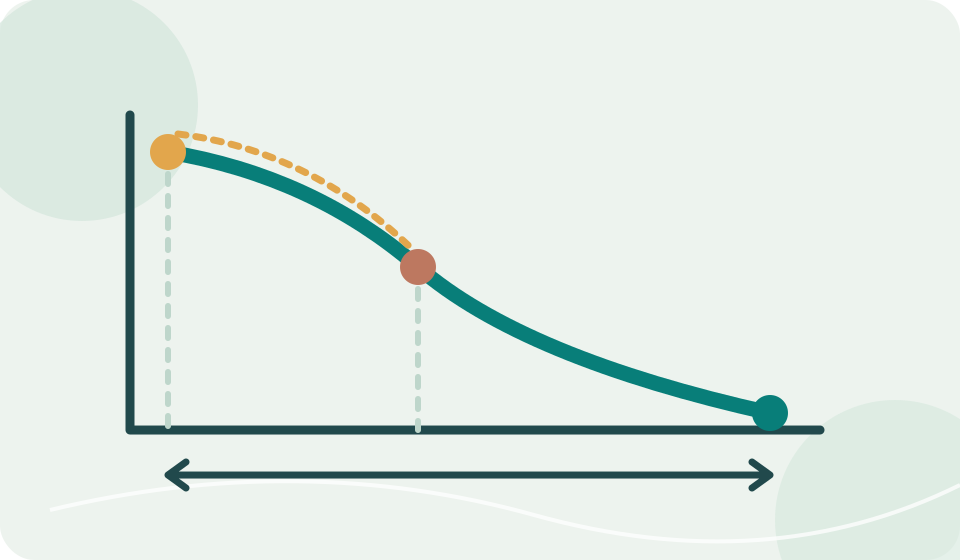
The two numerical calculations are shown once in Worked examples below. As a general check, Pcr varies directly with E and I and inversely with Le squared. At the same E, I, and K, doubling L doubles Le and reduces the ideal critical load to one quarter. Doubling I doubles the ideal load. These relationships help catch a unit or restraint mistake before relying on displayed digits.
A lower K increases the calculated load because it shortens Le, but K is not a tuning factor. It represents a structural boundary-condition model, including whether the frame can sway and how joints restrain rotation. Select it from a justified analysis or the applicable design method; do not change K merely to obtain a preferred capacity.
Check whether Euler applies
Euler theory assumes elastic behavior up to instability, small deflections before buckling, a uniform member, and a load applied concentrically through the section. It does not include yielding or inelastic column behavior. Short stocky columns may crush or yield before the Euler prediction is reached; slender thin-walled members may experience local plate or torsional-flexural modes first.
K depends on restraint of the full frame, including sway and joint rotation; do not infer it only from an idealized end sketch. Select it from a justified analysis or design method, then account for imperfections and resistance factors in the design check rather than adjusting K to fit a preferred result.
A practical calculation record
Document the member length between lateral restraints, the assumed end conditions and K source, the selected axis, E and its material source, and I for that same axis. Convert E and I to Pa and m⁴, calculate KL, square it, and then evaluate π²EI/(KL)². Report significant digits consistent with the inputs.
Compare the ideal load with the governing resistance method, including imperfections, local buckling, connections, and load combinations. The calculator result alone cannot establish acceptable capacity; investigate disagreement between models instead of selecting the larger value.

Worked examples
Pinned-like 3 m physical column
Inputs: E = 200 GPa; I = 800 cm⁴; physical unsupported length L = 3 m; K = 1; effective length Le = KL = 3 m.
Calculation: Pcr = π²EI/Le² = π²(200×10⁹ Pa)(800×10⁻⁸ m⁴)/(3 m)² = 1,754,596 N.
The ideal elastic Euler critical load is about 1.755 MN under the stated assumptions.
A 2 m physical member with K = 0.7
Inputs: E = 70 GPa; I = 250 cm⁴; physical unsupported length L = 2 m; K = 0.7; effective length Le = KL = 1.4 m.
Calculation: Le = KL = 0.7 × 2 m = 1.4 m. Pcr = π²(70×10⁹ Pa)(250×10⁻⁸ m⁴)/(1.4 m)² ≈ 881,215 N.
The idealized result is about 0.881 MN; code resistance and imperfections are not included.