
What the calculator calls normal stress
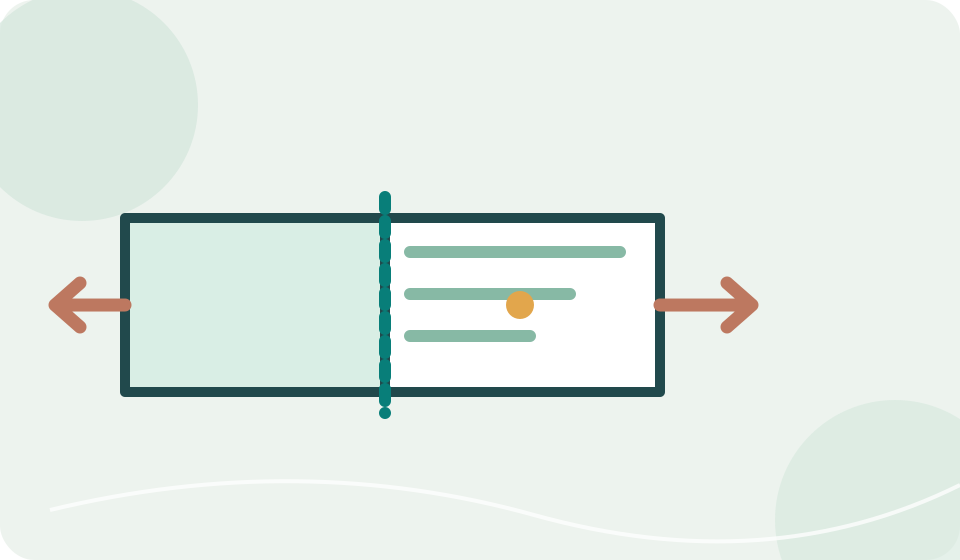
Normal stress is the component of force perpendicular to a section, divided by the area carrying that force. In this calculator the input is one applied axial force and one cross-sectional area, so the output is an average over that area. It is useful for a first check of a straight member loaded along its axis; it is not a map of stress at every point.
Choose the section through which the load actually passes. For a uniform bar that may be the gross section. A hole, notch, shoulder, thread, contact patch, or change in thickness can make the local distribution different. The simple average does not resolve those details or bending caused by a force that misses the centroid.
Enter force and area on the same physical basis
The force field is measured in newtons and accepts a finite signed number. A positive or negative sign records the direction convention used by the input; the calculation carries that sign into the stress. If a specification gives kilonewtons, multiply by 1,000. If it gives pounds-force, convert force to newtons before using this metric field.
Area is entered in square millimetres and must be greater than zero. It is the net area normal to the axial load, not a length, perimeter, or surface area. If you know a circular diameter d in millimetres, its gross area is πd²/4; for a rectangle use width times thickness. Subtract openings only when the intended section check calls for net area.
Formula and unit cancellation
The model is σ = F/A. With F in N and A in mm², the numerical quotient is N/mm². Since one pascal is one newton per square metre and one square metre contains one million square millimetres, 1 N/mm² equals 1,000,000 Pa, or 1 MPa. That is why the calculator can show the quotient directly in MPa without an extra numeric factor.
Keep the area conversion visible when comparing with a source in square metres: 80 mm² is 80 × 10⁻⁶ m². Dividing 1,200 N by that area gives 15,000,000 Pa, the same 15 MPa. Mixing 80 mm² with a force formula expecting m² would create a million-fold error.
Two worked checks
For F = 1,200 N and A = 80 mm², σ = 1,200/80 = 15 N/mm² = 15 MPa. The same result in SI base units is 1,200/(80 × 10⁻⁶) = 15,000,000 Pa. A hand calculator that shows 15 is correct only when the stress unit is understood as MPa.
Now hold force at 1,200 N and increase the area to 120 mm². Stress becomes 1,200/120 = 10 MPa. A separate check with 6,000 N on 100 mm² gives 60 MPa. These comparisons show the inverse area relationship: doubling area halves average stress only when load and the assumptions of this average model remain unchanged.
Worked examples
A first axial check
Inputs: Force = 1,200 N; area = 80 mm².
Calculation: σ = F/A = 1,200/80 = 15 N/mm²; 15 N/mm² = 15 MPa.
The signed average normal stress is 15 MPa for the entered direction.
Same force, larger section
Inputs: Force = 1,200 N; area = 120 mm².
Calculation: σ = 1,200/120 = 10 N/mm² = 10 MPa.
Increasing area from 80 to 120 mm² reduces the average from 15 to 10 MPa at the same load.

Read the sign and magnitude carefully
The sign follows the entered force convention; it does not by itself label a material as safe or unsafe. In a common axial convention, tension and compression have opposite signs, but the calculator's result should be read against the convention used in the problem. For a magnitude-only comparison, take an absolute value after preserving the direction information in your notes.
A stress value is not a factor of safety. Comparing it with an allowable or yield value requires the material condition, temperature, load combination, applicable design standard, and a suitable model. A small average can coexist with a much larger local concentration near a geometric discontinuity or load introduction point.
A practical verification checklist
Before accepting the number, confirm that the chosen cut is perpendicular to the axial force, the area is positive and in mm², the force has been converted to N, and the load is centered enough that axial stress is a reasonable first model. Recompute F/A with units attached. If the answer changes by exactly a factor of one million, inspect whether Pa and MPa were confused.
For a member with several load paths, calculate the force carried by the particular section rather than assigning the entire external load automatically. For a hollow or perforated section, establish whether gross or net area is appropriate. If the member is also bent, twisted, unstable, or locally crushed, this single average axial result is only one component of a broader analysis.