How to use this calculator
Check dry sample mass recovered after sieve analysis against its initial dry mass.
- Enter Initial dry sample mass, Recovered dry mass. Match the units shown beside each field and review the result together with the assumptions below.
- Read the worked example below to check the expected input format and result.
- Compare another scenario by changing one input at a time. Use Reset to return to the starting values.
How this calculation works
A sieve mass-recovery check compares the dry mass recovered from all sieve fractions and the pan with the initial dry sample mass. A discrepancy can flag handling loss, moisture mismatch, transfer loss, or weighing error before interpreting gradation results.
Inputs and units
initialDryMass— Initial dry sample mass- Mass of the complete dry sample before sieving, in grams.
recoveredDryMass— Recovered dry mass- Sum of dry material recovered from all sieves and the pan, in grams.
Formula
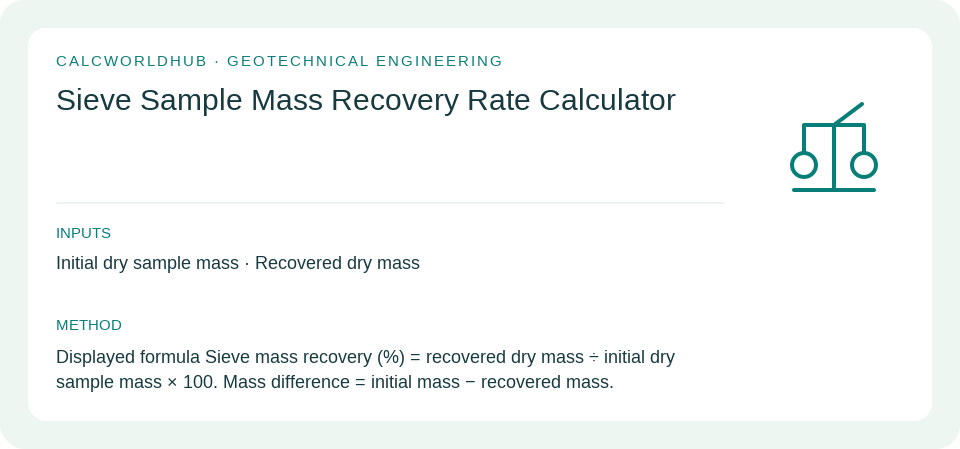
Sieve mass recovery (%) = recovered dry mass ÷ initial dry sample mass × 100. Mass difference = initial mass − recovered mass.
Method
Weigh the complete initial dry sample and sum the dry masses recovered from every sieve and the pan. Use the same balance units and moisture basis.
Worked example
A 500 g dry sample yields 497.5 g across the sieves and pan. Mass recovery is 99.50%, leaving a 2.5 g difference.
Assumptions and limits
A recovery ratio above 100% indicates a mass-balance inconsistency, such as moisture or tare error. This check does not identify which sieve fraction caused the discrepancy.
Frequently asked questions
What mass belongs in the recovered total?
Add all dry sieve fractions and pan material included in the test.
Should I compare wet mass with dry mass?
No. Use the same moisture basis, preferably dry mass, for the start and recovered fractions.
What does recovery above 100% mean?
Review tare, moisture, sample identity, and balance readings because recovered mass should not exceed the initial dry sample.
How do I use the Sieve Sample Mass Recovery Rate Calculator?
Enter Initial dry sample mass, Recovered dry mass. Match the units shown beside each field and review the result together with the assumptions below.
What is a worked example of Sieve Sample Mass Recovery Rate?
A 500 g dry sample yields 497.5 g across the sieves and pan. Mass recovery is 99.50%, leaving a 2.5 g difference.
Reference: FHWA LTPP sieve analysis protocol using initial dry sample mass. See our calculation methodology.