Apparent magnitude from absolute magnitude calculator
Translate absolute magnitude to apparent magnitude at a chosen distance.
inputs.
Calculator
How to use this calculator
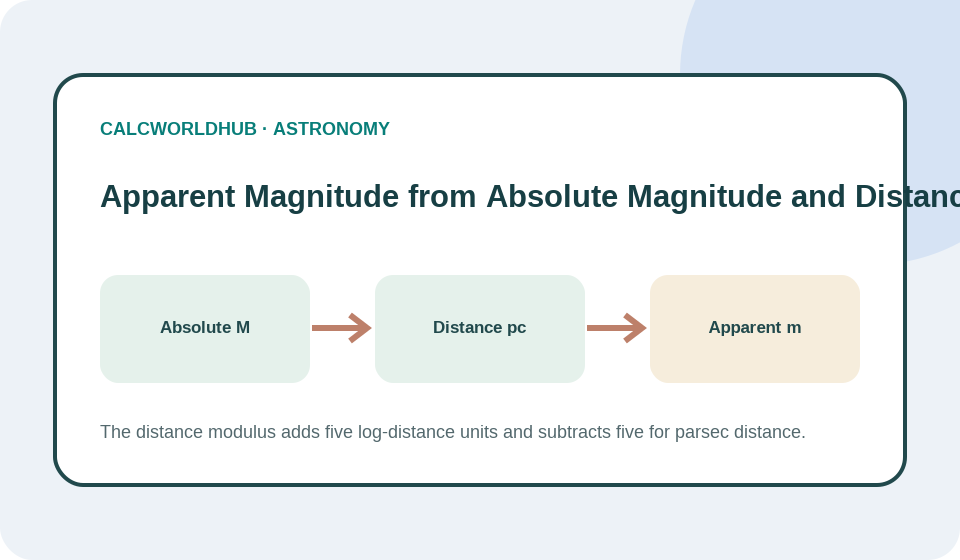
Estimate apparent magnitude from absolute magnitude and distance in parsecs using distance modulus.
- Enter Absolute magnitude M, Distance (parsecs). Match the units shown beside each field and review the result together with the assumptions below.
- Read the worked example below to check the expected input format and result.
- Compare another scenario by changing one input at a time. Use Reset to return to the starting values.
Estimate apparent magnitude from intrinsic magnitude and distance
Distance modulus translates an object’s absolute magnitude into the apparent magnitude it would have at a specified distance. Smaller magnitude values represent brighter apparent light.
Inputs and units
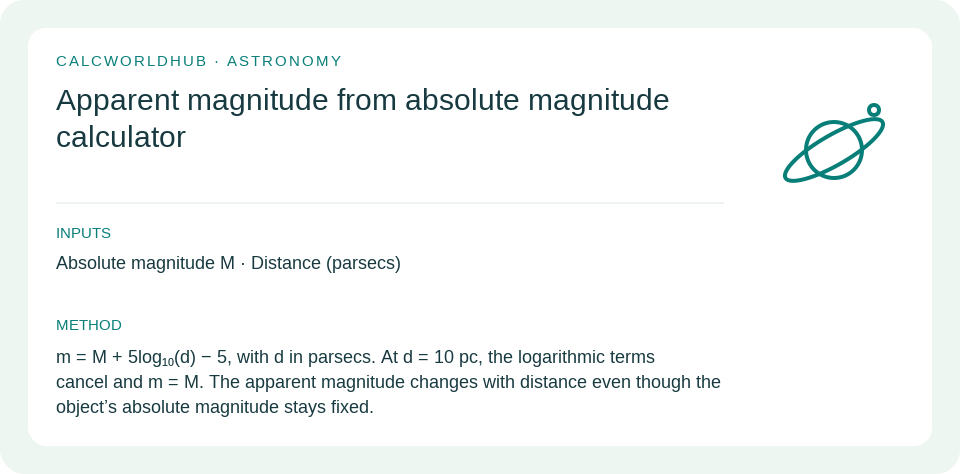
- Absolute magnitude M: Intrinsic magnitude defined at the standard distance of 10 parsecs.
- Distance (parsecs): Positive distance from the observer to the object, in parsecs.
Formula and method
m = M + 5log₁₀(d) − 5, with d in parsecs. At d = 10 pc, the logarithmic terms cancel and m = M. The apparent magnitude changes with distance even though the object’s absolute magnitude stays fixed.
Worked example
For M = 4 and d = 40 pc, m = 4 + 5log₁₀(40) − 5 = 7.0103 mag.
Interpreting the result
The object would appear about 3.01 magnitudes fainter than its absolute magnitude at 40 parsecs. Magnitudes are logarithmic, so a difference is not a linear brightness difference.
Assumptions and limits
Assumes distance is known and ignores interstellar extinction, bandpass differences, variability, and measurement uncertainty. Use a distance estimate appropriate to the object and wavelength being studied.
Method references
Frequently asked questions
Why does the result get numerically larger with distance?
A larger magnitude denotes a fainter object. Increasing distance spreads the same emitted light over a larger area, increasing apparent magnitude.
How do I use the Apparent magnitude from absolute magnitude calculator?
Enter Absolute magnitude M, Distance (parsecs). Match the units shown beside each field and review the result together with the assumptions below.
What is a worked example of Apparent magnitude from absolute magnitude?
For M = 4 and d = 40 pc, m = 4 + 5log₁₀(40) − 5 = 7.0103 mag.
What does the Apparent magnitude from absolute magnitude calculator calculate?
Estimate apparent magnitude from absolute magnitude and distance in parsecs using distance modulus.
What assumptions apply to Apparent magnitude from absolute magnitude?
Assumes distance is known and ignores interstellar extinction, bandpass differences, variability, and measurement uncertainty. Use a distance estimate appropriate to the object and wavelength being studied.
Good calculators show their work.
CalcWorldHub is built around clear inputs and visible assumptions. Results are estimates for planning; check official sources or your provider’s terms when exact figures matter.