How to use this calculator
Find the slow amplitude-modulation frequency created by two nearby pure tones.
- Enter First frequency (Hz), Second frequency (Hz). Match the units shown beside each field and review the result together with the assumptions below.
- Read the worked example below to check the expected input format and result.
- Compare another scenario by changing one input at a time. Use Reset to return to the starting values.
Acoustic beat frequency explained
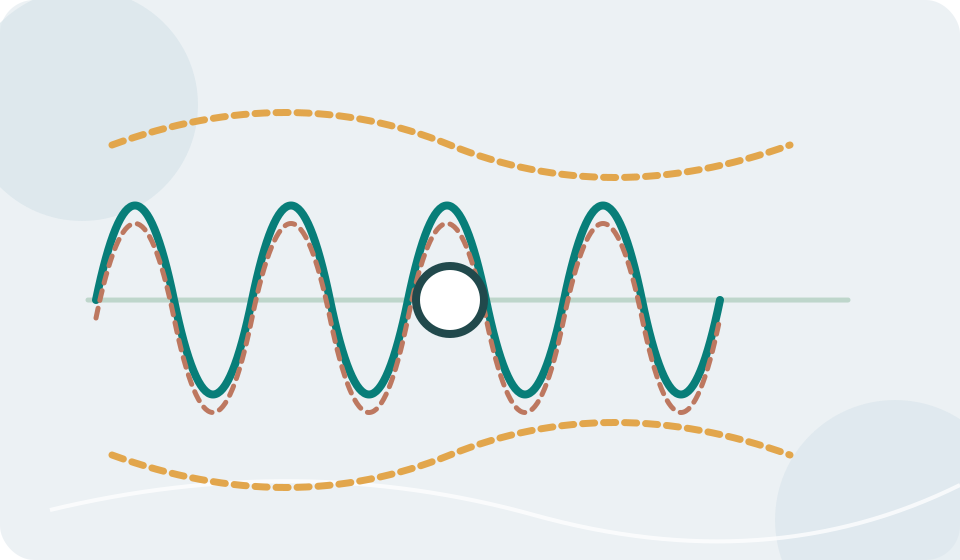
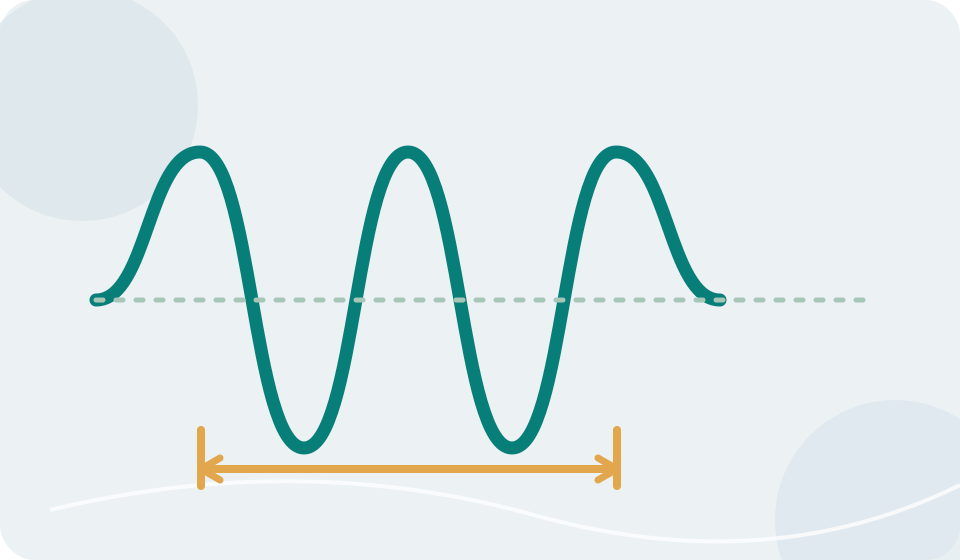
When two nearby tones overlap, their amplitude envelope varies at the absolute difference of their frequencies. The reciprocal of a nonzero beat frequency gives the time between successive beat maxima.
Example with entered values
First frequency (Hz) = 440; Second frequency (Hz) = 443.
- Beat frequency: 3 Hz
- Beat period: 0.333333 s
For 440 Hz and 443 Hz tones, the difference is 3 Hz, so successive beat maxima are separated by 1/3 second.
The calculation behind the result
Beat frequency = |f₁−f₂|; beat period = 1/beat frequency.
Inputs and units
- First frequency (Hz)
- Frequency of the first tone.
- Second frequency (Hz)
- Frequency of the second tone.
Before interpreting the result
The simple audible-beat interpretation assumes nearby tones and a sufficiently coherent overlap. Perceived loudness also depends on amplitude.
Doppler shift models frequency change caused by motion. Beats arise from superposing two frequencies.
Frequently asked questions
What if both tones match?
The beat frequency is zero and there is no finite beat period.
Can the result identify which tone is higher?
No. The absolute difference loses that direction.
Do amplitudes change the beat rate?
They affect modulation depth, not the simple difference frequency.
How do I use the Acoustic beat frequency calculator?
Enter First frequency (Hz), Second frequency (Hz). Match the units shown beside each field and review the result together with the assumptions below.
What is a worked example of Acoustic beat frequency?
First frequency (Hz) = 440; Second frequency (Hz) = 443. Beat frequency: 3 Hz Beat period: 0.333333 s For 440 Hz and 443 Hz tones, the difference is 3 Hz, so successive beat maxima are separated by 1/3 second.
See our calculation methodology.