Bicycle gear development calculator
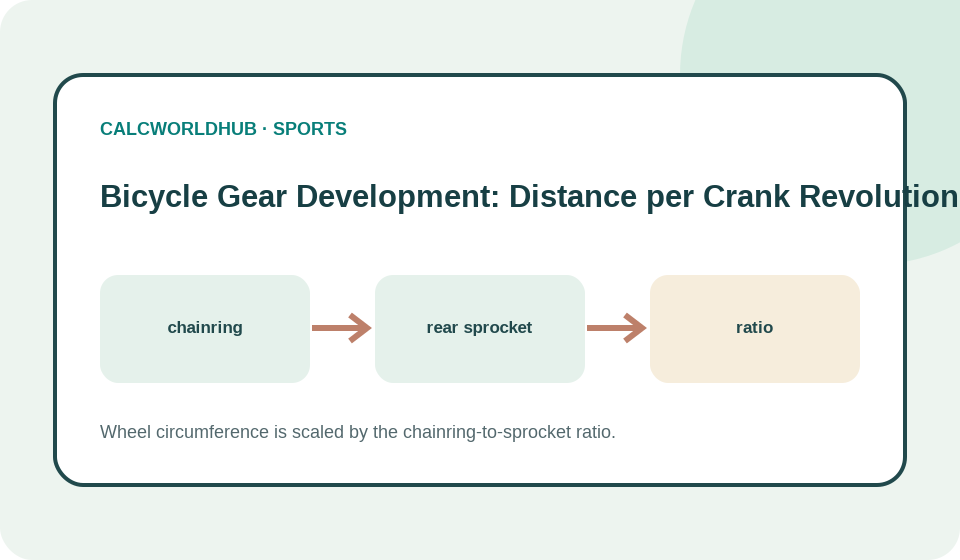
Translate a tooth-count combination into the ground distance traveled for one crank revolution.
inputs.
Related calculators and articles
Compare methods and explore more free tools in sports.
How to use this calculator
Estimate bicycle rollout per crank revolution from wheel circumference and front-to-rear chainring tooth ratio.
- Complete the labeled inputs for Bicycle gear development. Use the units requested by each field, then read the displayed result alongside the method and limits below.
- Read the worked example below to check the expected input format and result.
- Compare another scenario by changing one input at a time. Use Reset to return to the starting values.
Gear ratio multiplied by wheel rollout
Formula and method
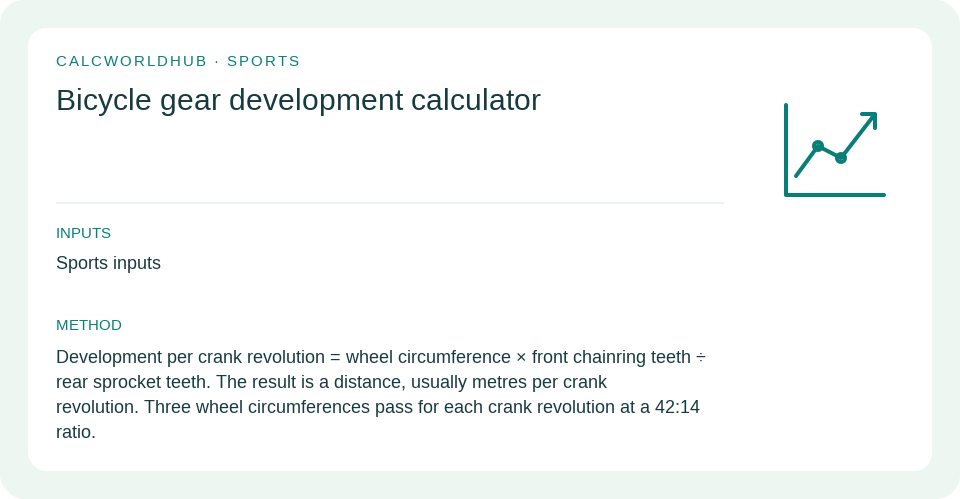
Development per crank revolution = wheel circumference × front chainring teeth ÷ rear sprocket teeth. The result is a distance, usually metres per crank revolution.
Worked example
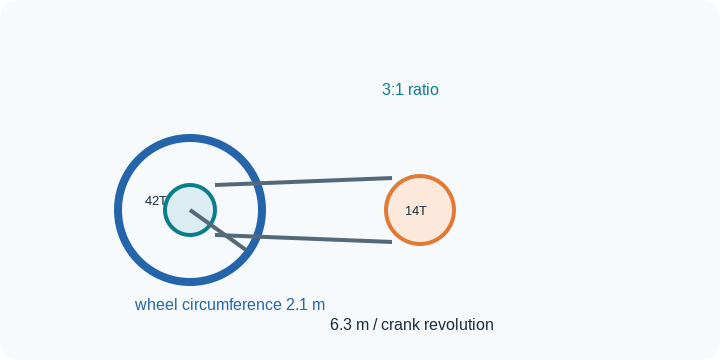
A 42-tooth chainring driving a 14-tooth sprocket has a 3:1 ratio. With a 2.1 m wheel circumference, rollout is 2.1 × 3 = 6.3 m per crank revolution.
Interpreting the result
A larger rollout covers more ground per pedal revolution and requires more torque at the crank for the same wheel force. Speed also depends on cadence.
Assumptions and limits
The estimate treats tire circumference and tooth counts as exact. Tire size, pressure, wear, and loaded radius alter real rollout; drivetrain losses are not part of the distance ratio.
Read our calculation methodology.
Frequently asked questions
How do I use the Bicycle gear development calculator?
Complete the labeled inputs for Bicycle gear development. Use the units requested by each field, then read the displayed result alongside the method and limits below.
What is a worked example of Bicycle gear development?
A 42-tooth chainring driving a 14-tooth sprocket has a 3:1 ratio. With a 2.1 m wheel circumference, rollout is 2.1 × 3 = 6.3 m per crank revolution.
What does the Bicycle gear development calculator calculate?
Estimate bicycle rollout per crank revolution from wheel circumference and front-to-rear chainring tooth ratio.
What assumptions apply to Bicycle gear development?
The estimate treats tire circumference and tooth counts as exact. Tire size, pressure, wear, and loaded radius alter real rollout; drivetrain losses are not part of the distance ratio.
Which method does the Bicycle gear development calculator use?
Development per crank revolution = wheel circumference × front chainring teeth ÷ rear sprocket teeth. The result is a distance, usually metres per crank revolution. Three wheel circumferences pass for each crank revolution at a 42:14 ratio.