Probability calculator guides
Explore 9 practical guides with worked examples, clear assumptions, and direct links to the calculators they explain.
Showing 1–9 of 9 articles

At Least One Marked Item: Sample Without Replacement
Calculate the chance a simple random sample contains one or more marked items from a finite population without replacement.
Read article
At Least One of Unequal Independent Events
Combine different independent event probabilities by multiplying their failure chances and taking the complement.
Read article
At Least One Success: Calculate the Complement Probability
Find the chance of one or more successes across independent trials with the same success probability.
Read article
Bayes’ Theorem for Two Hypotheses: Update a Probability
Update a prior probability using evidence likelihoods for two exhaustive hypotheses.
Read article
Bayes’ Theorem with Three Hypotheses
Normalize prior-weighted likelihoods for three mutually exclusive hypotheses after observing common evidence.
Read article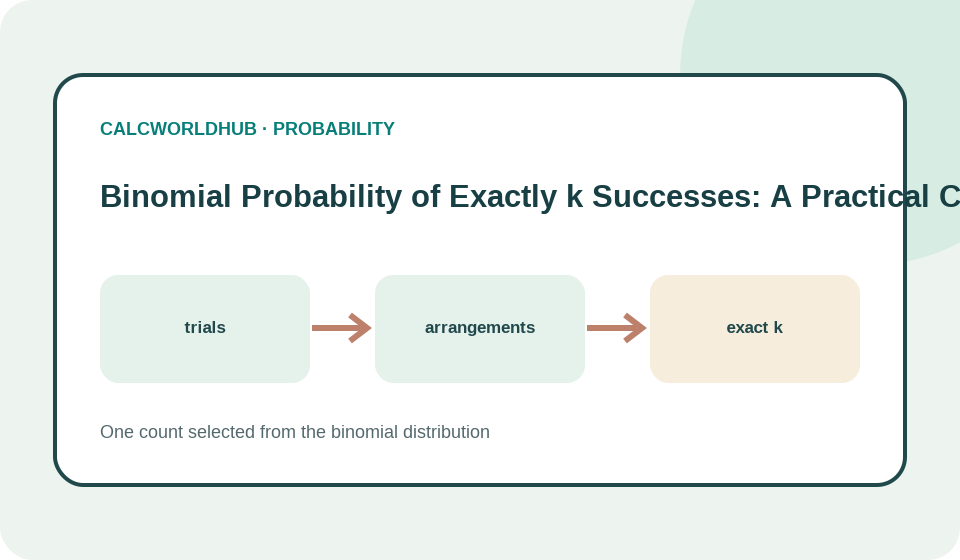
Binomial Probability of Exactly k Successes: A Practical Calculation
Calculate the probability of exactly k successes in n independent trials when every trial has the same success probability.
Read article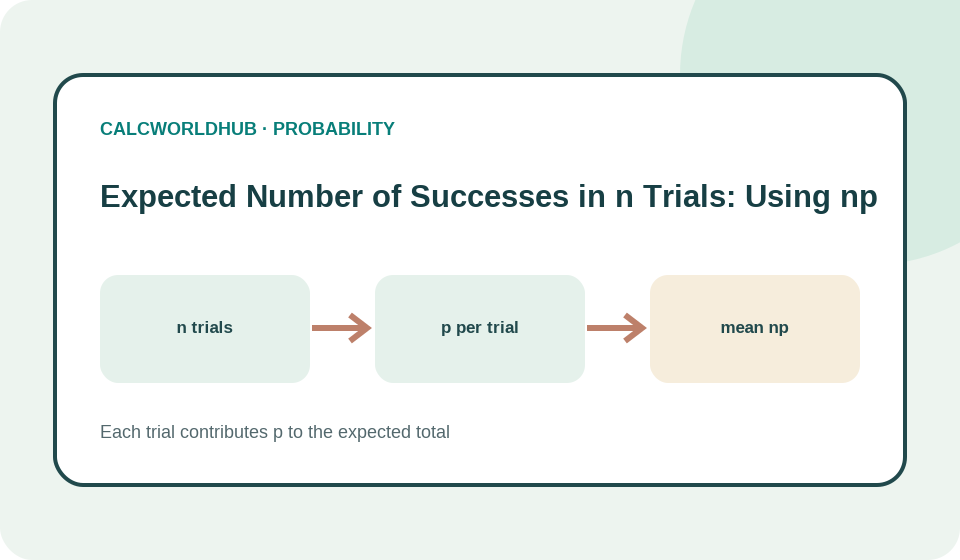
Expected Number of Successes in n Trials: Using np
Estimate the long-run average number of successes from a fixed trial count and a constant probability of success.
Read article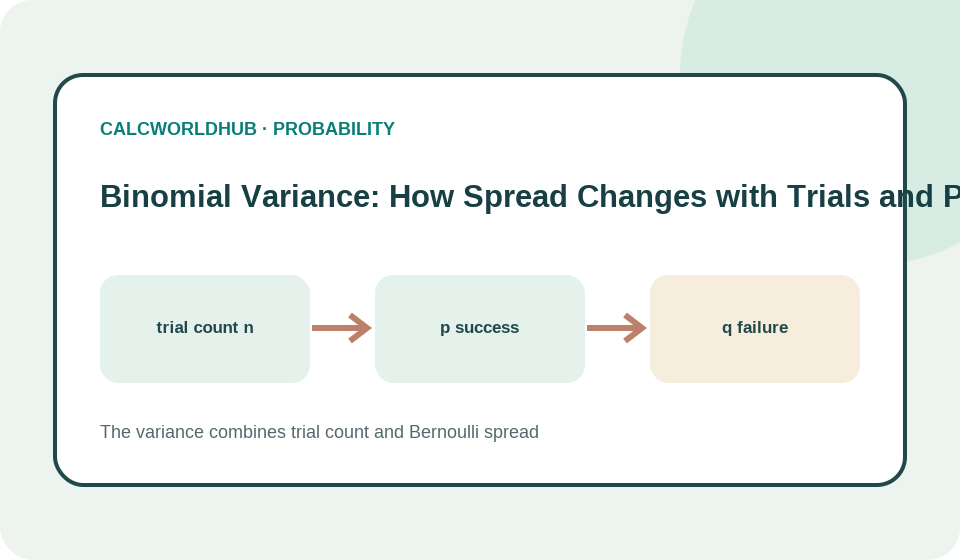
Binomial Variance: How Spread Changes with Trials and Probability
Calculate the binomial variance in success counts from the number of trials and per-trial success probability.
Read article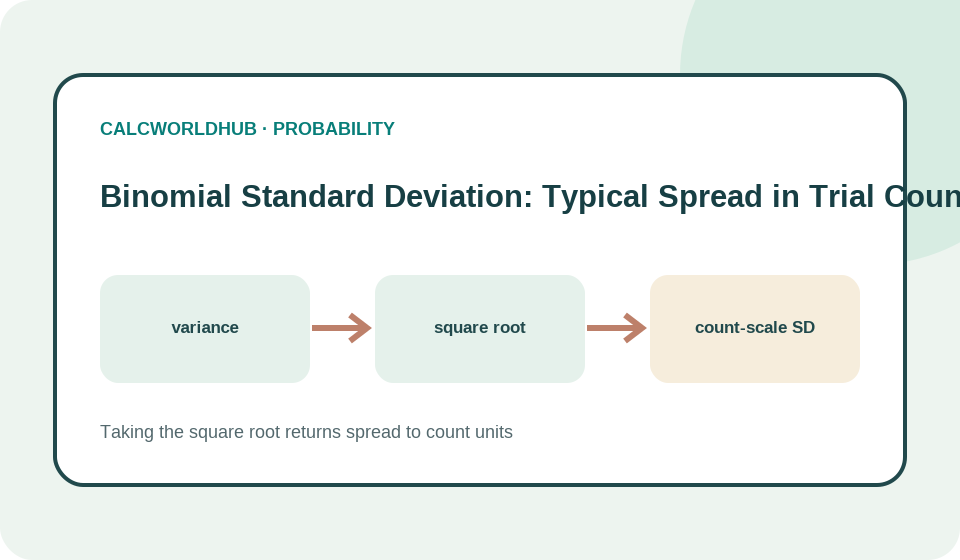
Binomial Standard Deviation: Typical Spread in Trial Counts
Estimate the standard deviation of a binomial success count from n trials and a constant success probability.
Read article