Automotive calculator guides
Explore 8 practical guides with worked examples, clear assumptions, and direct links to the calculators they explain.
Showing 1–8 of 8 articles
Electric Vehicle Range from Usable Energy and Consumption
Estimate electric vehicle range from usable battery energy, average consumption, and an energy reserve, then see what the simplified result leaves out.
Read article
EV Battery Charge Time from State of Charge and Power
Estimate EV charging time between two state-of-charge targets from usable capacity, average power, and wall-to-battery efficiency.
Read article
Trip Fuel Cost from Distance, Efficiency, and Fuel Price
Estimate the fuel cost of a trip from distance, fuel consumption in litres per 100 kilometres, and fuel price per litre.
Read article
Tire Size Diameter and Speedometer Comparison
Compare nominal tire diameters and estimate the speedometer effect of a tire-size change using sidewall height and rim diameter.
Read article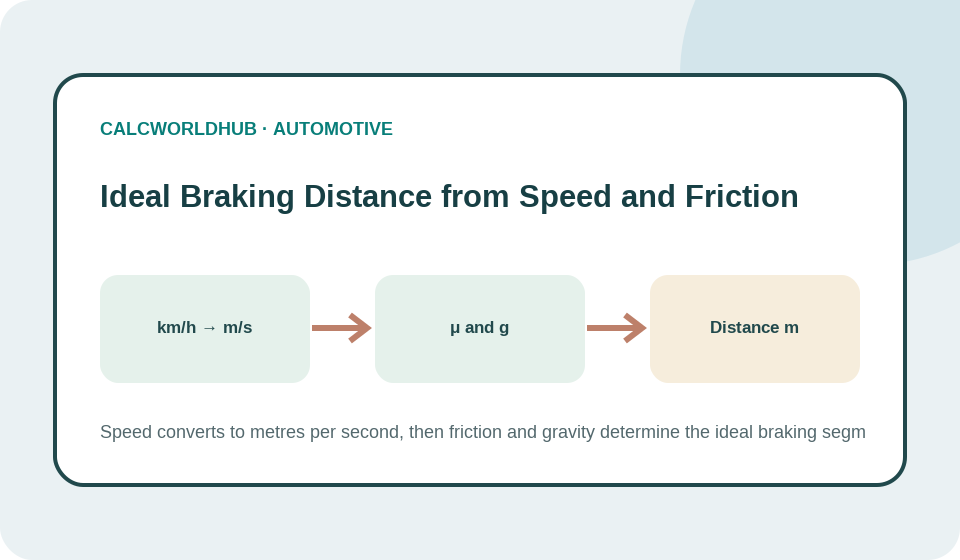
Ideal Braking Distance from Speed and Friction
Estimate ideal level-road braking distance from speed, a friction coefficient, and gravitational acceleration, excluding reaction time.
Read article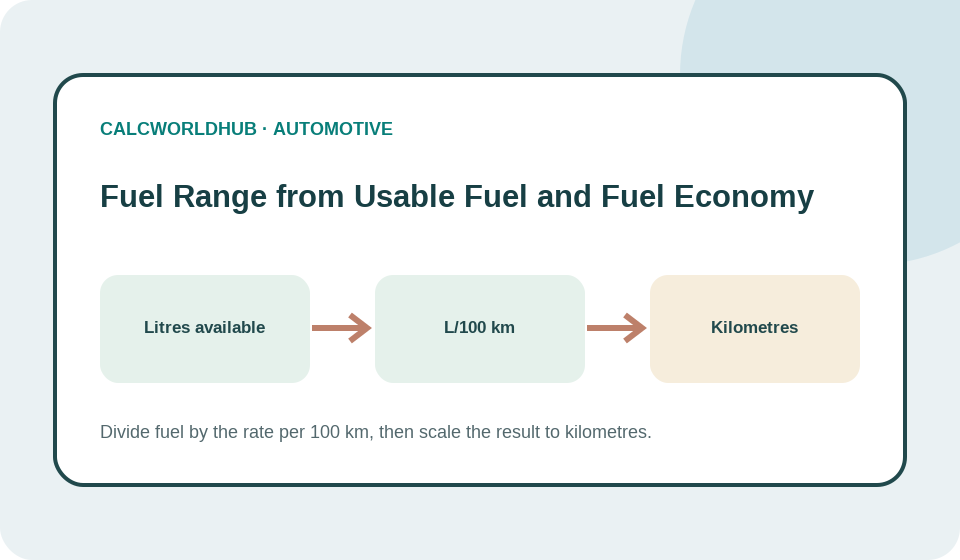
Fuel Range from Usable Fuel and Fuel Economy
Estimate idealized driving distance from available fuel and consumption stated in litres per 100 kilometres.
Read article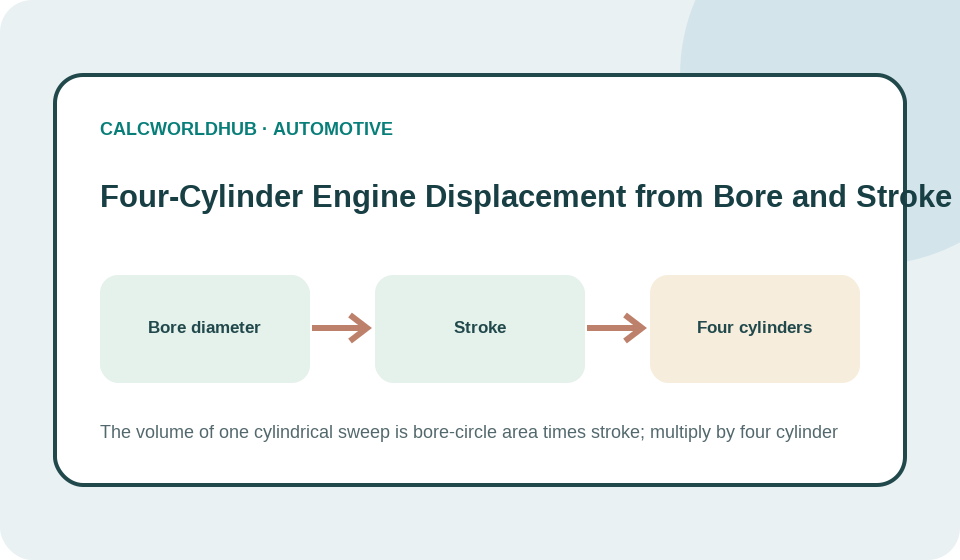
Four-Cylinder Engine Displacement from Bore and Stroke
Calculate a four-cylinder engine’s geometric swept volume from cylinder bore and piston stroke.
Read article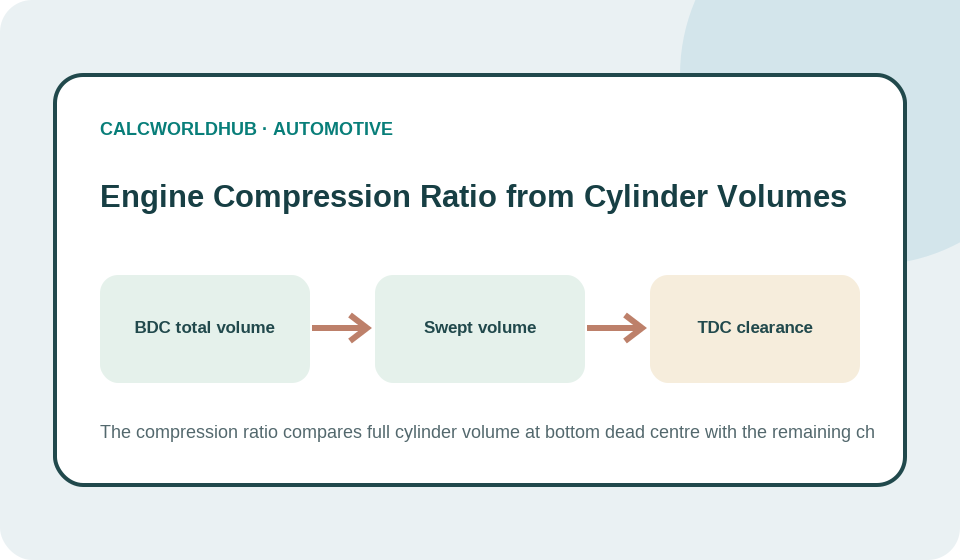
Engine Compression Ratio from Cylinder Volumes
Calculate geometric compression ratio from cylinder bore, stroke, and clearance volume, and see why it is not a cranking-pressure reading.
Read article