Food calculator guides
Explore 13 practical guides with worked examples, clear assumptions, and direct links to the calculators they explain.
Showing 1–12 of 13 articles
Baker Hydration Percentage for Scaling Dough
Calculate baker hydration from water and flour weights, then use the percentage to scale a dough formula without confusing it with total dough weight.
Read article
Brine Salt Concentration by Weight
Calculate salt as a percentage of total salt-and-water mass and distinguish that concentration from a salt-to-water recipe ratio.
Read article
Coffee Extraction Yield from TDS, Dose, and Brew
Estimate coffee extraction yield from beverage mass, measured dissolved solids, and dry dose while keeping extraction separate from brew strength.
Read article
Food Cost per Serving from Ingredient Costs
Estimate ingredient cost per portion by dividing a recipe batch cost by its actual serving yield, with clear limits for overhead and waste.
Read article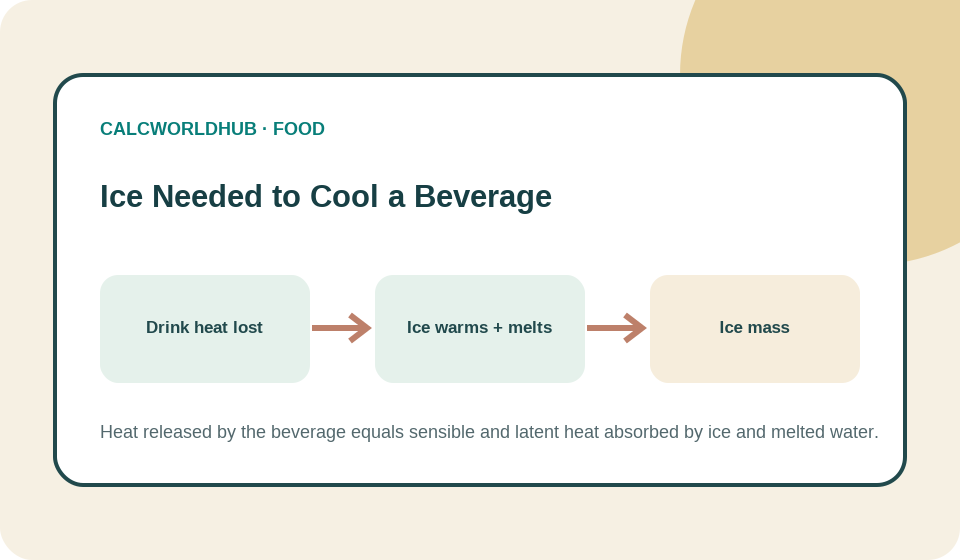
Ice Needed to Cool a Beverage
Estimate the ideal mass of ice needed to cool a measured beverage, using heat capacity, melting energy, and the target mixed temperature.
Read article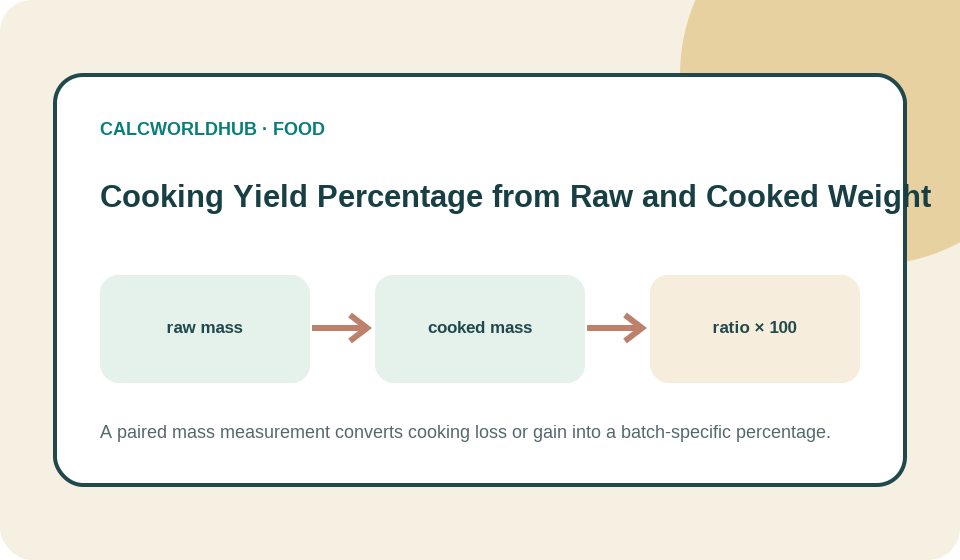
Cooking Yield Percentage from Raw and Cooked Weight
Calculate cooked yield as cooked weight divided by raw weight, then interpret what a batch-level percentage can and cannot show.
Read article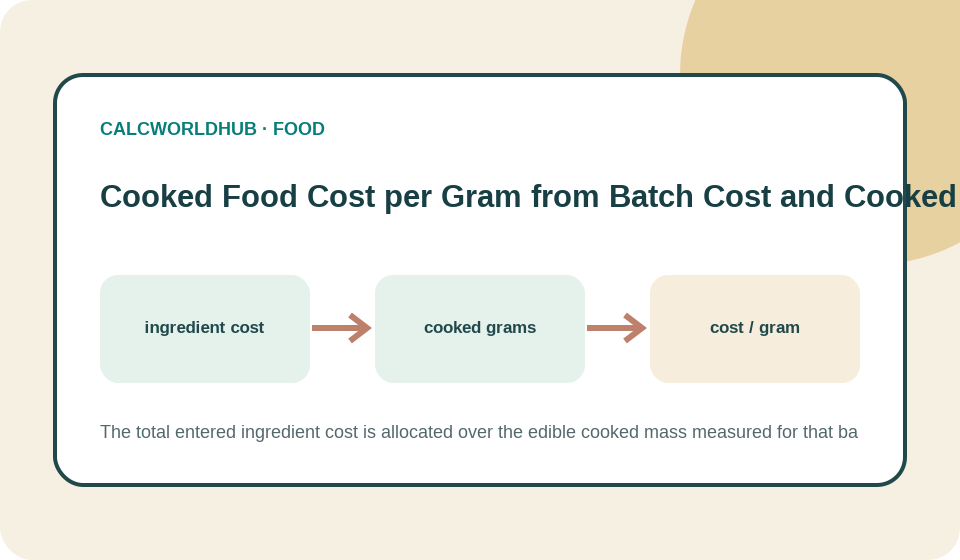
Cooked Food Cost per Gram from Batch Cost and Cooked Weight
Allocate ingredient cost across final cooked grams for portion planning, with clear limits on what the unit cost includes.
Read article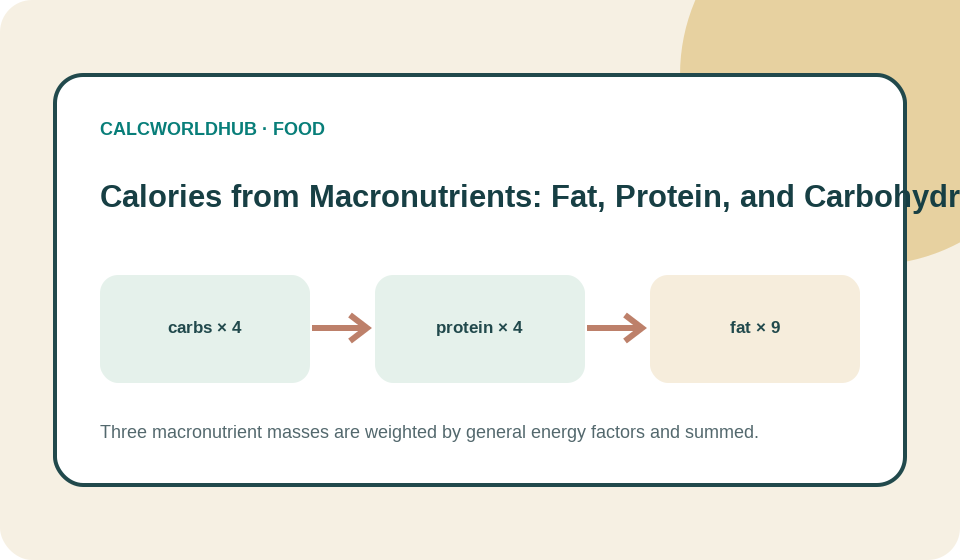
Calories from Macronutrients: Fat, Protein, and Carbohydrates
Estimate energy from grams of carbohydrate, protein, and fat with the general 4-4-9 factors and clear limits on label comparisons.
Read article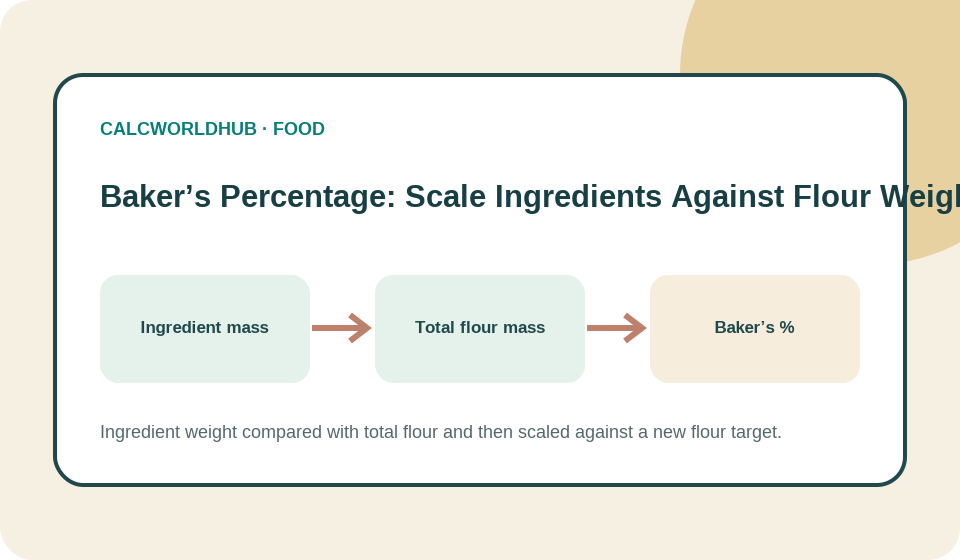
Baker’s Percentage: Scale Ingredients Against Flour Weight
Calculate an ingredient’s baker’s percentage from its mass and the total flour mass, then use the ratio to scale a formula consistently.
Read article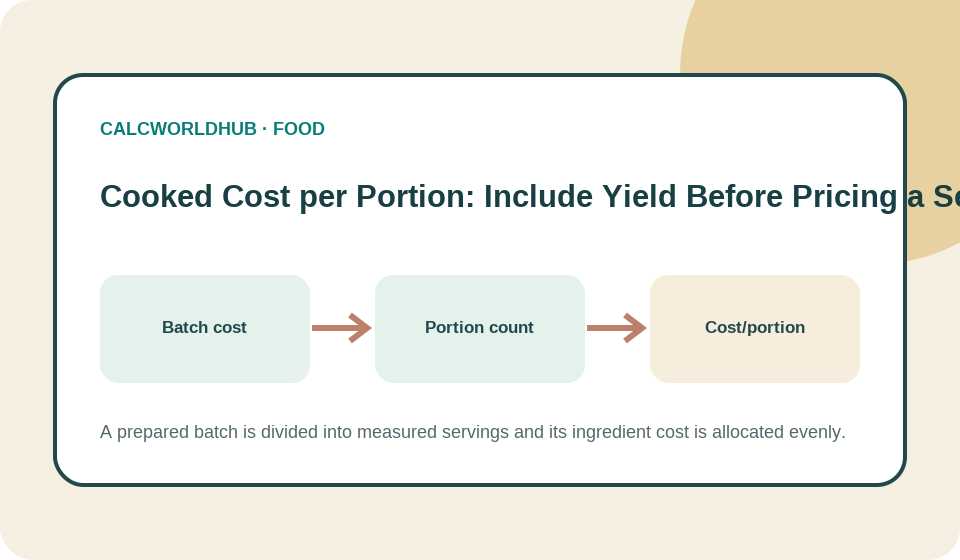
Cooked Cost per Portion: Include Yield Before Pricing a Serving
Divide the ingredient cost assigned to a cooked batch by the number of usable portions to estimate ingredient cost per serving.
Read article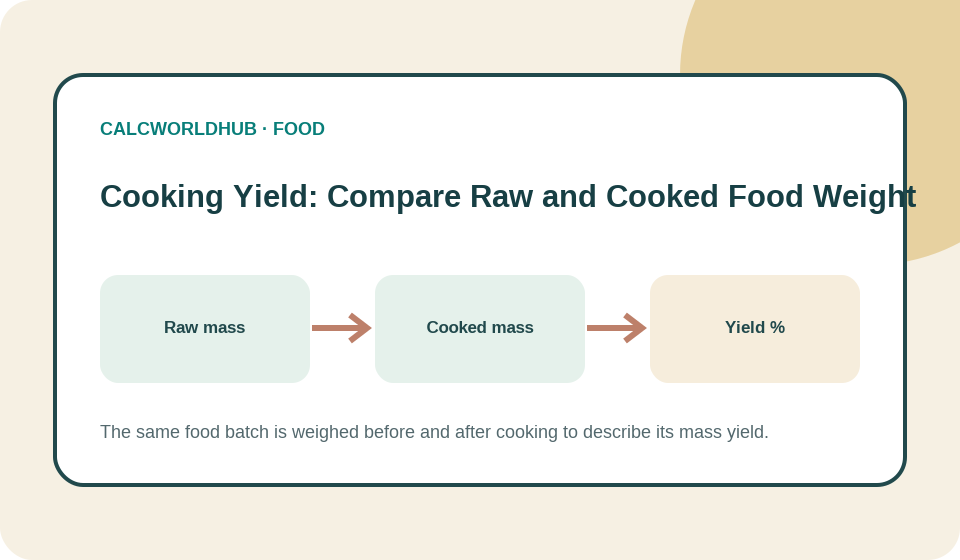
Cooking Yield: Compare Raw and Cooked Food Weight
Express cooked food mass as a percentage of its raw starting mass while keeping the cooking method and product definition clear.
Read article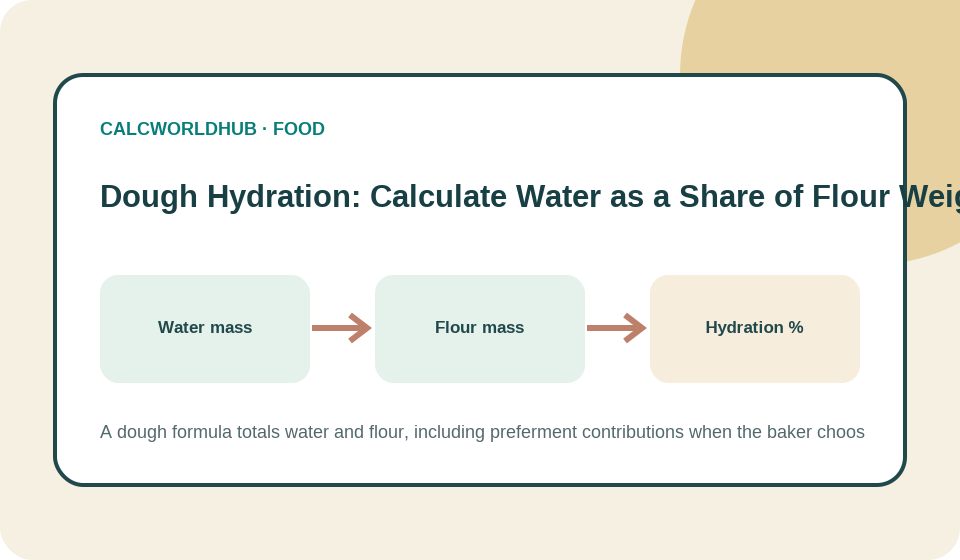
Dough Hydration: Calculate Water as a Share of Flour Weight
Calculate dough hydration by comparing the entered water mass with the flour mass, then state which preferments and liquids are included.
Read article