Agriculture calculator guides
Explore 18 practical guides with worked examples, clear assumptions, and direct links to the calculators they explain.
Showing 1–12 of 18 articles
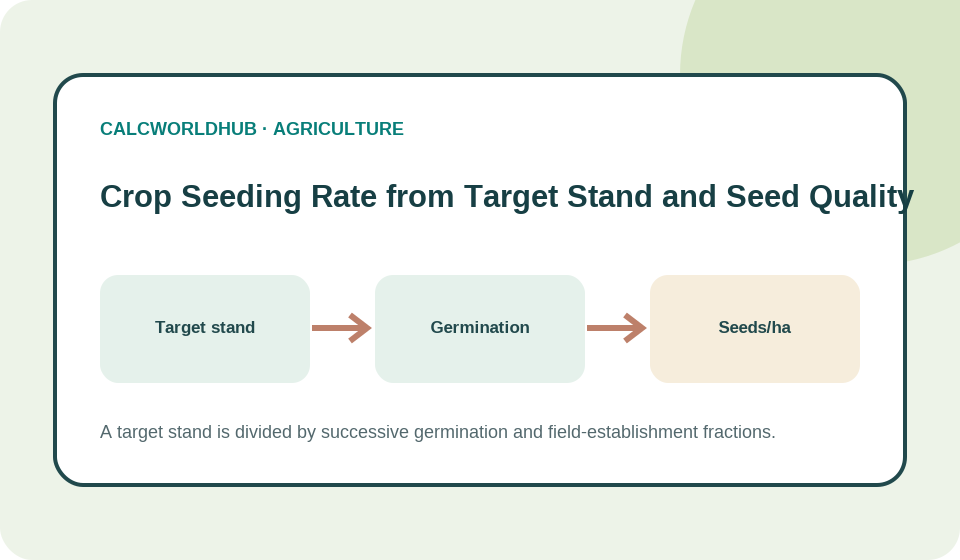
Crop Seeding Rate from Target Stand and Seed Quality
Estimate seeds per hectare needed for a target crop stand after applying germination and field-establishment rates.
Read article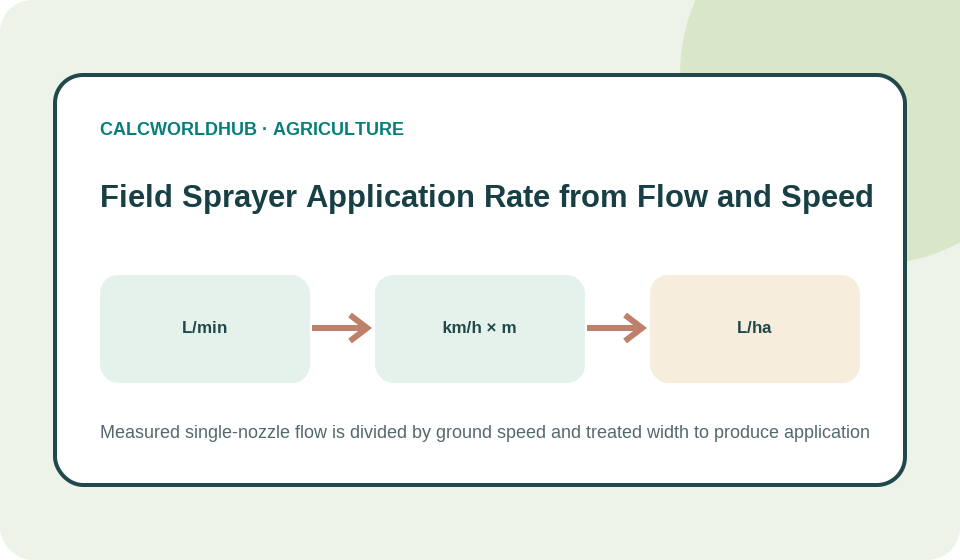
Field Sprayer Application Rate from Flow and Speed
Calculate field sprayer application volume per hectare from measured nozzle flow, actual travel speed, and nozzle spacing.
Read article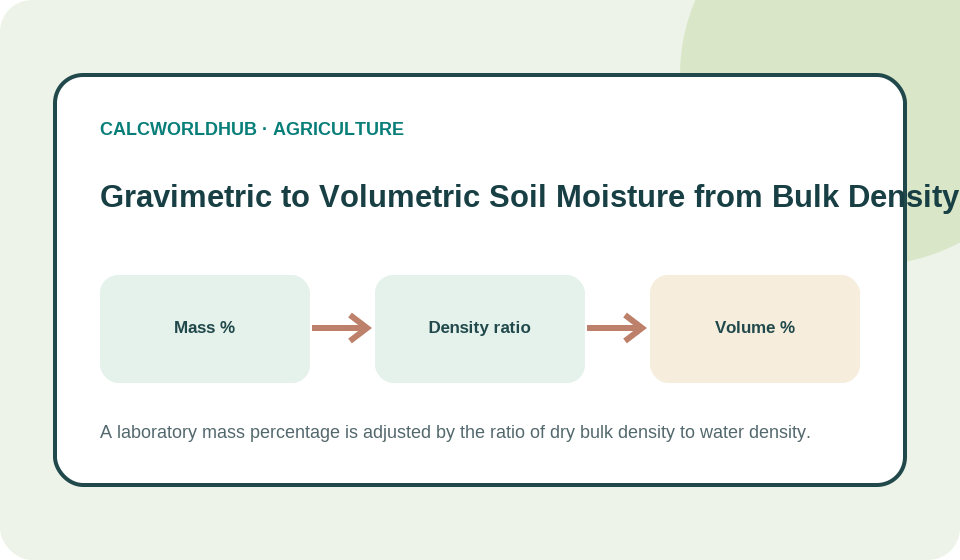
Gravimetric to Volumetric Soil Moisture from Bulk Density
Convert gravimetric soil-water content to volumetric content using dry bulk density and water density.
Read article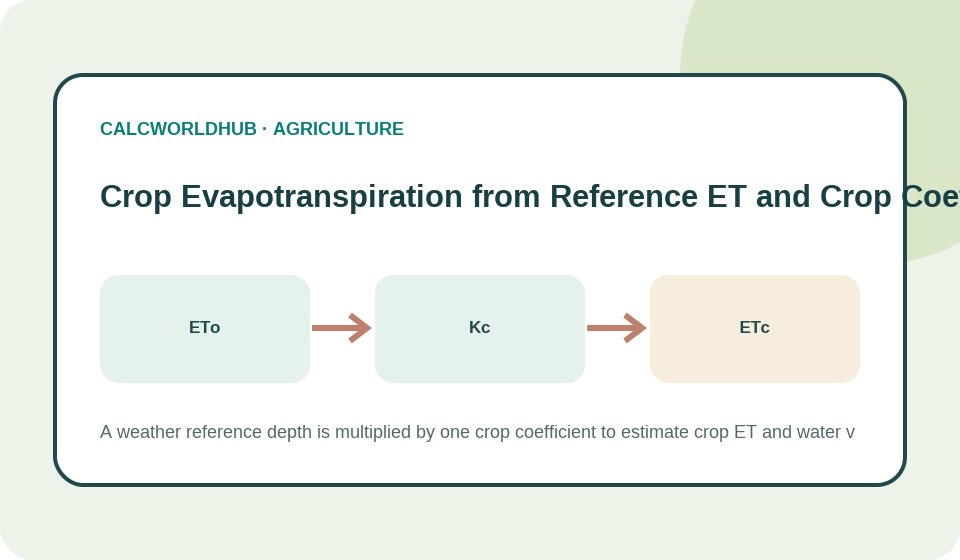
Crop Evapotranspiration from Reference ET and Crop Coefficient
Estimate crop evapotranspiration from reference ET and a crop coefficient for the same period.
Read article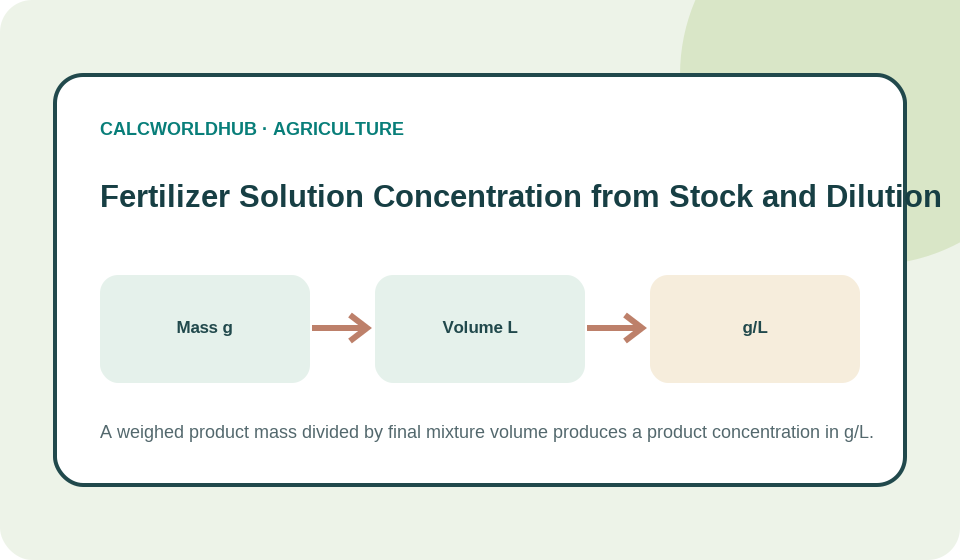
Fertilizer Solution Concentration from Stock and Dilution
Calculate the mass concentration of a fertilizer mixture in grams per litre using fertilizer mass and final solution volume.
Read article
Daily Growing Degree Days: Estimate Heat Accumulation
Estimate one day of crop heat accumulation from minimum, maximum, and base temperatures, then understand what the simple total can and cannot predict.
Read article
Grain Drying Shrink: Estimate Weight Lost as Moisture Falls
Estimate the mass remaining after grain moisture falls, using wet-basis moisture percentages and a dry-matter balance.
Read article
Soil Porosity from Bulk and Particle Density
Estimate total pore space from dry bulk density and particle density, while keeping porosity distinct from water content and infiltration.
Read article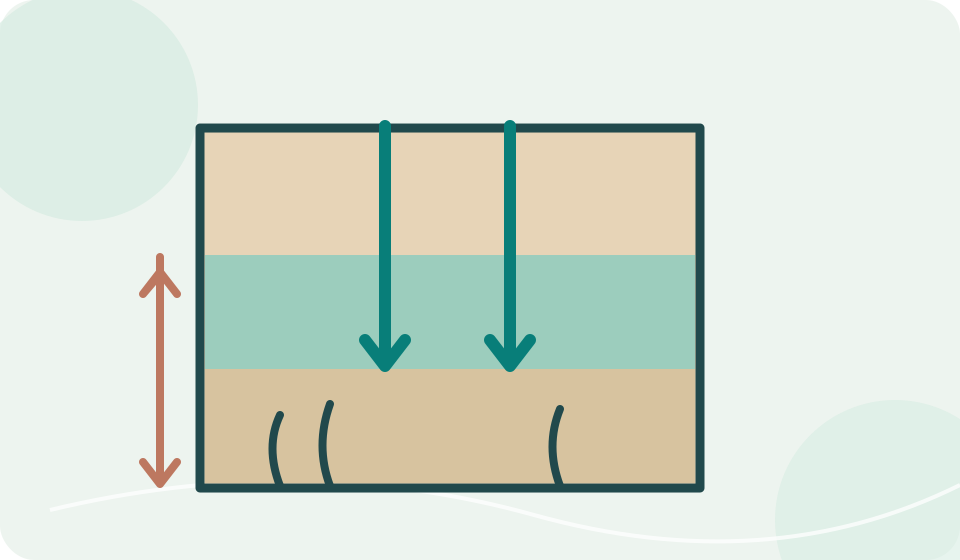
Root-Zone Available Water Storage: Convert Soil Water to Depth
Convert volumetric soil-water percentages and effective rooting depth into a total available-water depth in millimetres.
Read article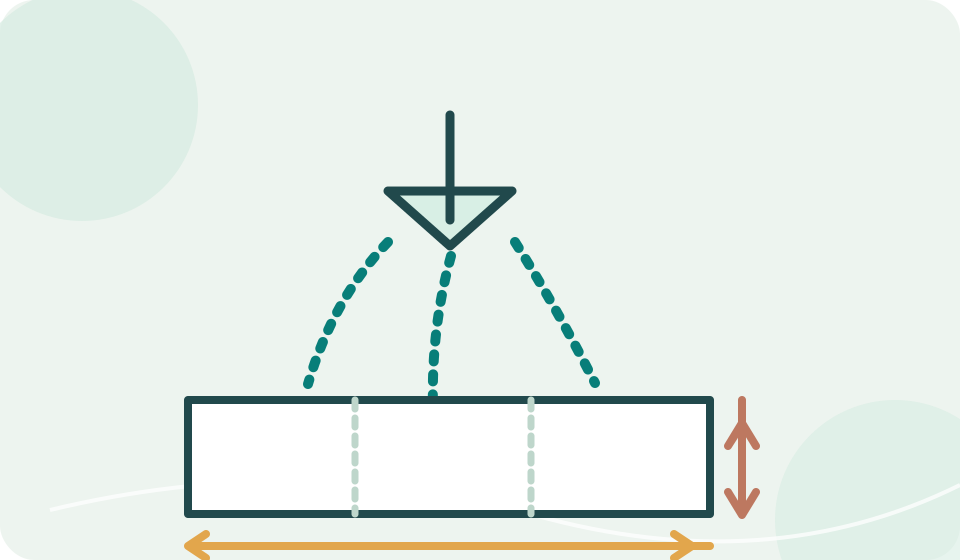
Sprinkler Precipitation Rate: Convert Flow and Spacing to Depth per Hour
Estimate the nominal average application rate from emitter discharge and rectangular sprinkler spacing, then compare it with field catch-can measurements.
Read article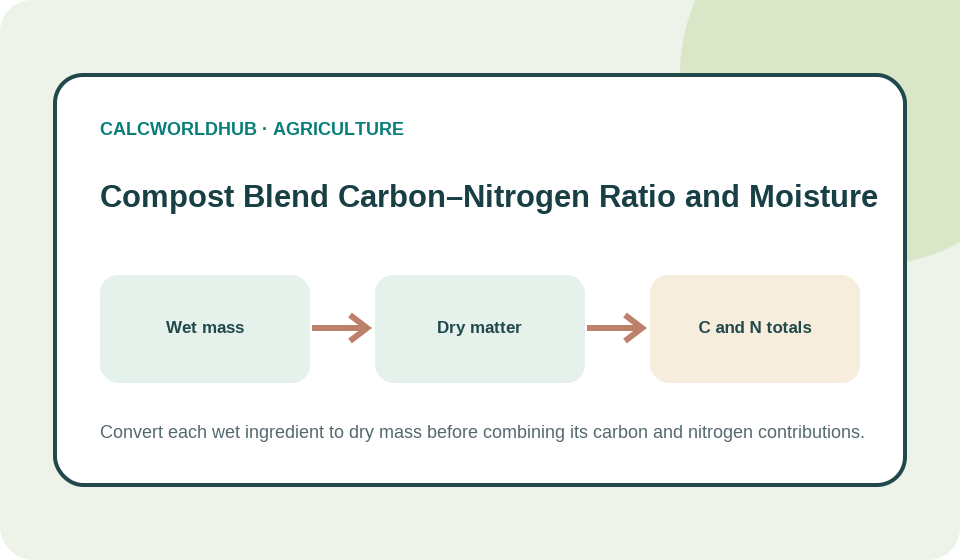
Compost Blend Carbon–Nitrogen Ratio and Moisture
Compare several compost ingredients by dry-matter carbon and nitrogen while keeping wet-basis moisture separate.
Read article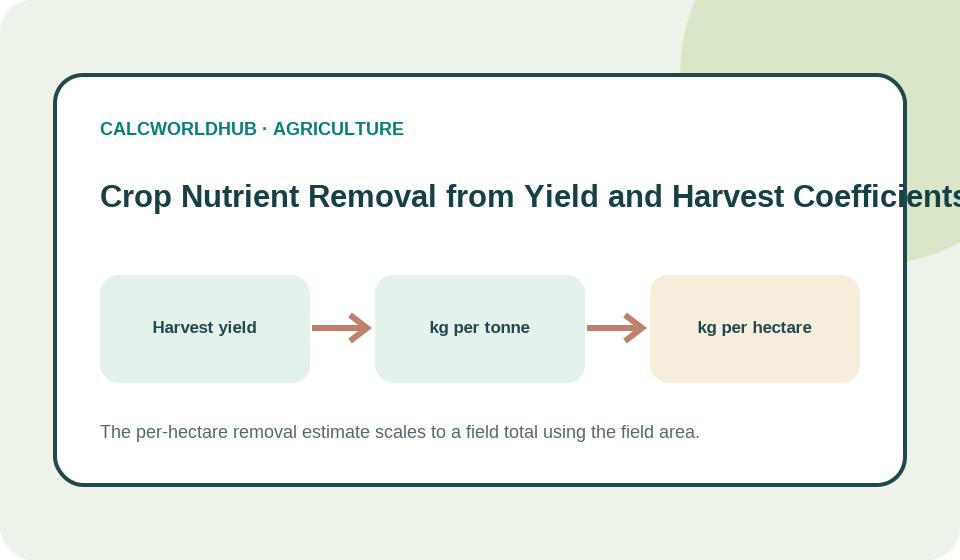
Crop Nutrient Removal from Yield and Harvest Coefficients
Estimate harvested nutrient removal per hectare and across a field from yield and a crop-specific coefficient.
Read article