Calculator guides
Clear, source-linked explanations and worked examples for the calculators you use. Browse all 650 guides by topic or search the full collection.
Showing 613–624 of 650 articles
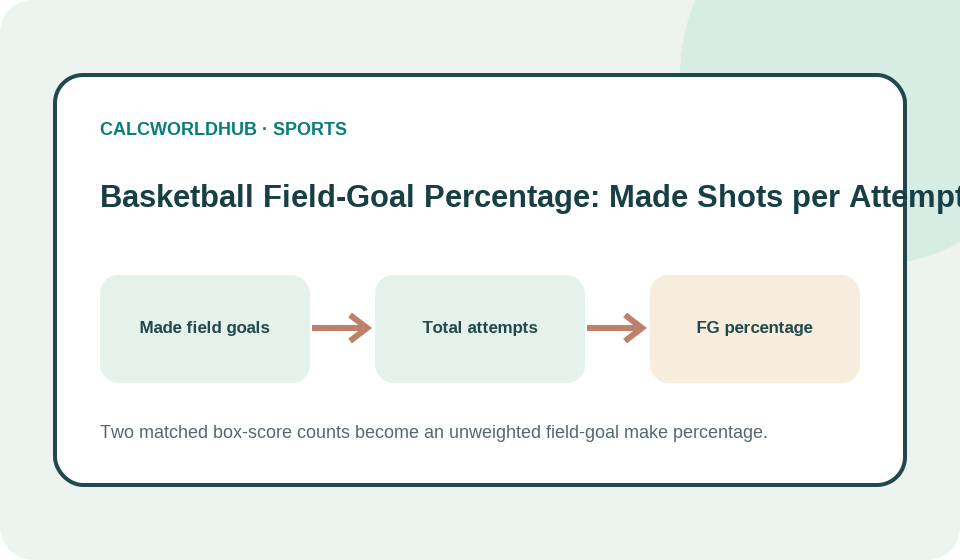
Basketball Field-Goal Percentage: Made Shots per Attempt
Calculate field-goal percentage from made shots and attempts, and distinguish this simple shooting rate from a points-weighted measure.
Read article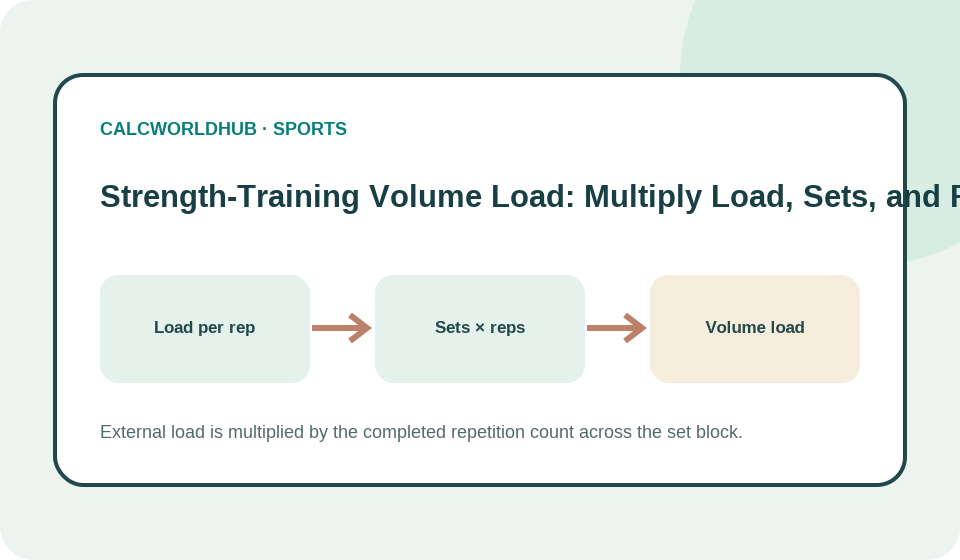
Strength-Training Volume Load: Multiply Load, Sets, and Repetitions
Calculate external lifting volume load from load, completed sets, and repetitions per set, while recognizing what this simple total leaves out.
Read article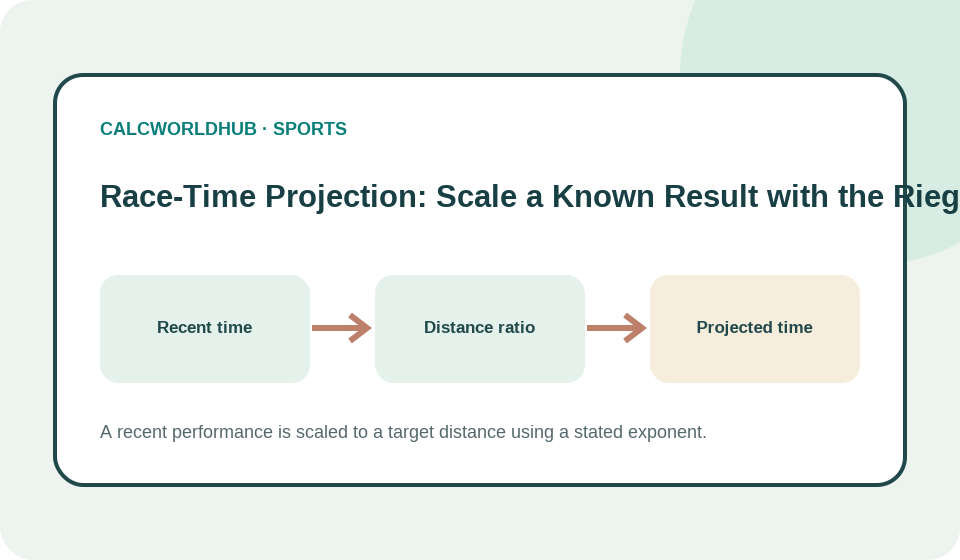
Race-Time Projection: Scale a Known Result with the Riegel Model
Project a time at another race distance from one recent result using the Riegel power-law model and an explicitly chosen distance exponent.
Read article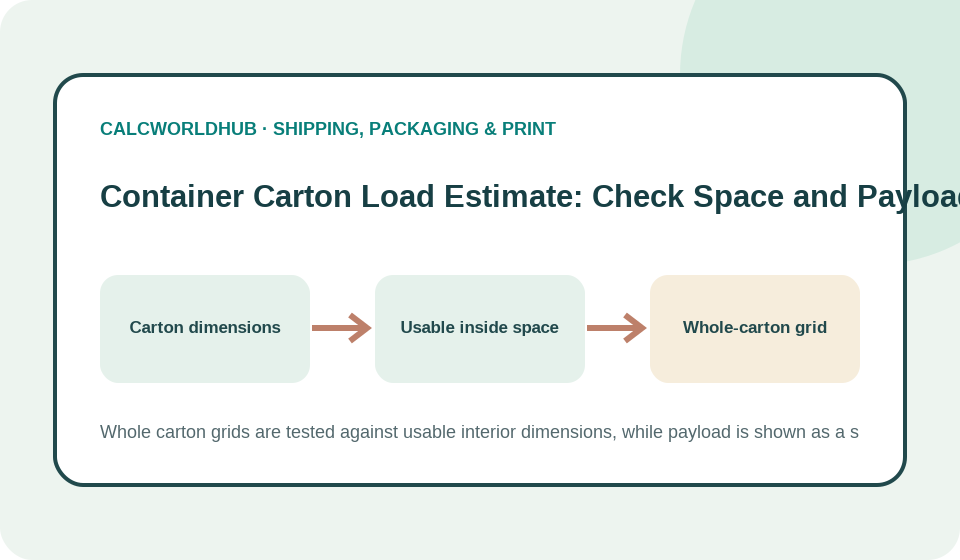
Container Carton Load Estimate: Check Space and Payload Separately
Estimate how many identical cartons fit by testing their orientations against usable container dimensions, then check payload and loading limits separately.
Read article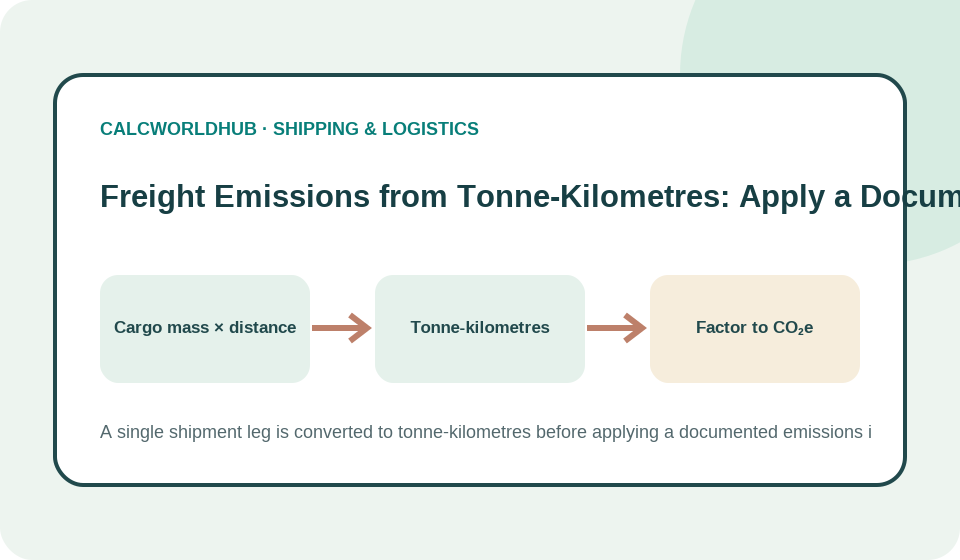
Freight Emissions from Tonne-Kilometres: Apply a Documented Factor
Estimate single-leg freight emissions from cargo mass, distance, and a stated grams-per-tonne-kilometre factor, with scope and units made explicit.
Read article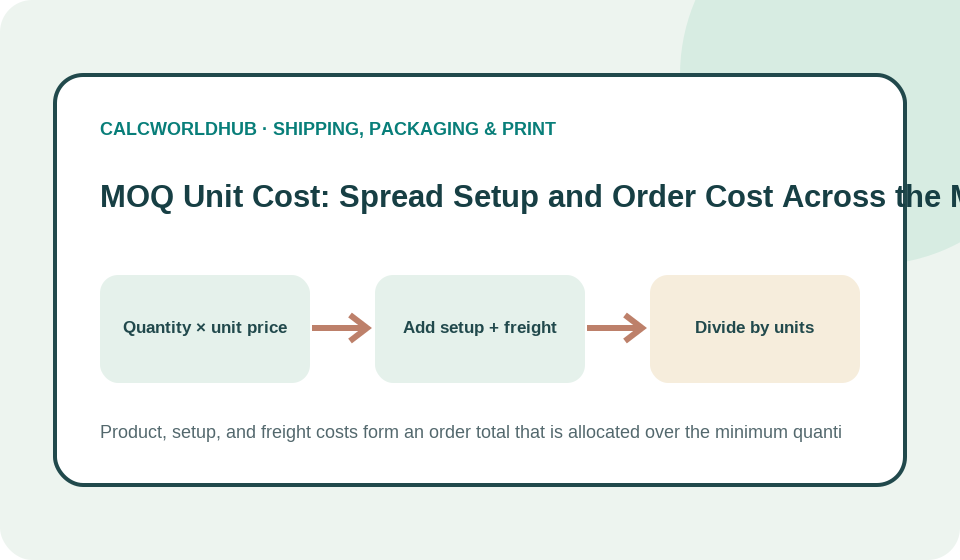
MOQ Unit Cost: Spread Setup and Order Cost Across the Minimum Run
Estimate the included per-unit order cost by adding product, setup, and freight amounts, then dividing by the minimum order quantity.
Read article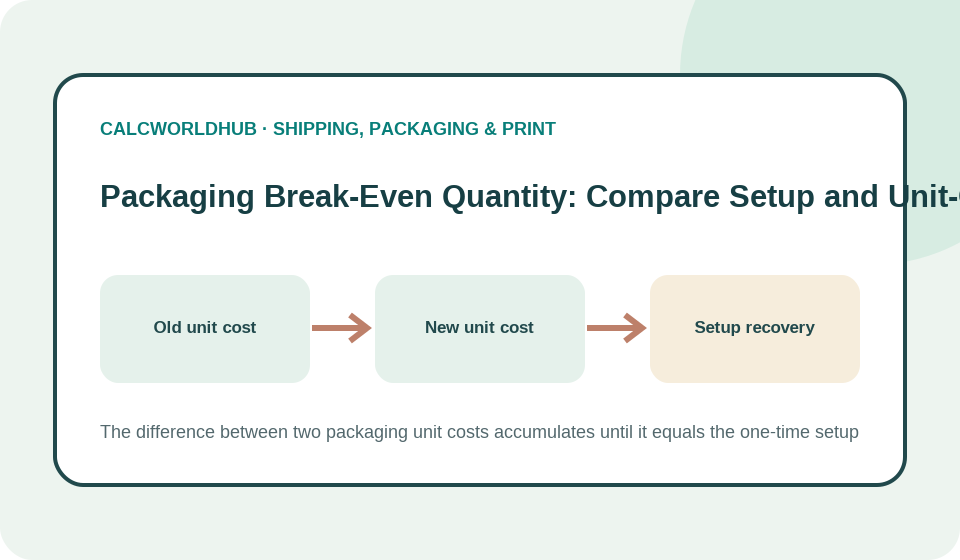
Packaging Break-Even Quantity: Compare Setup and Unit-Cost Offers
Find the whole-unit quantity at which a lower packaging price recovers its one-time setup cost compared with an older per-unit offer.
Read article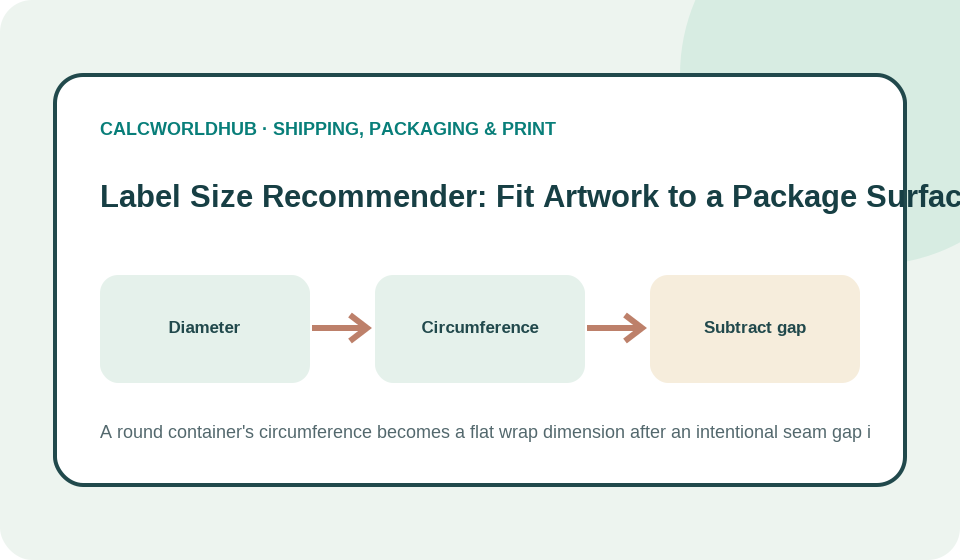
Label Size Recommender: Fit Artwork to a Package Surface
Estimate a wrap label's flat width from a round container's diameter and gap, then convert the entered height and calculated width to millimetres.
Read article
Binomial Probability of Exactly k Successes: A Practical Calculation
Calculate the probability of exactly k successes in n independent trials when every trial has the same success probability.
Read article
Binomial Cumulative Probability: Chance of k or Fewer Successes
Find the cumulative binomial probability of k or fewer successes across independent trials with a constant success probability.
Read article
Expected Number of Successes in n Trials: Using np
Estimate the long-run average number of successes from a fixed trial count and a constant probability of success.
Read article
Binomial Variance: How Spread Changes with Trials and Probability
Calculate the binomial variance in success counts from the number of trials and per-trial success probability.
Read article