Calculator guides
Clear, source-linked explanations and worked examples for the calculators you use. Browse all 650 guides by topic or search the full collection.
Showing 601–612 of 650 articles
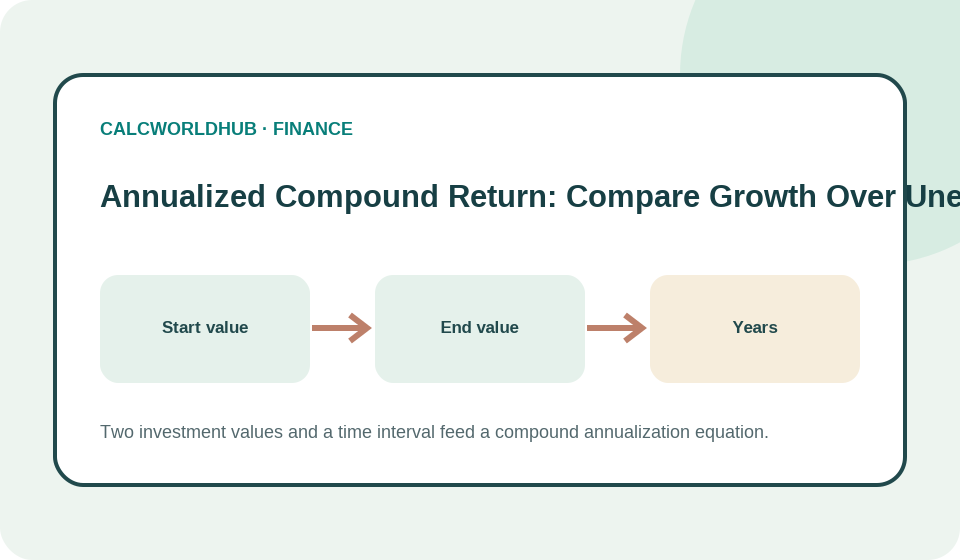
Annualized Compound Return: Compare Growth Over Unequal Holding Periods
Convert beginning and ending investment values over a stated holding period into a compound annualized rate.
Read article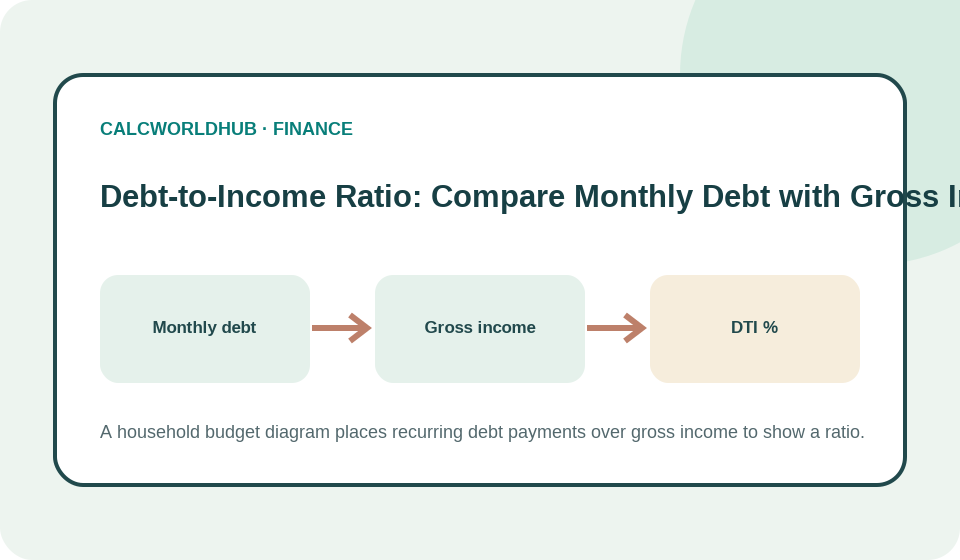
Debt-to-Income Ratio: Compare Monthly Debt with Gross Income
Calculate monthly debt payments as a percentage of gross monthly income using a consistent period.
Read article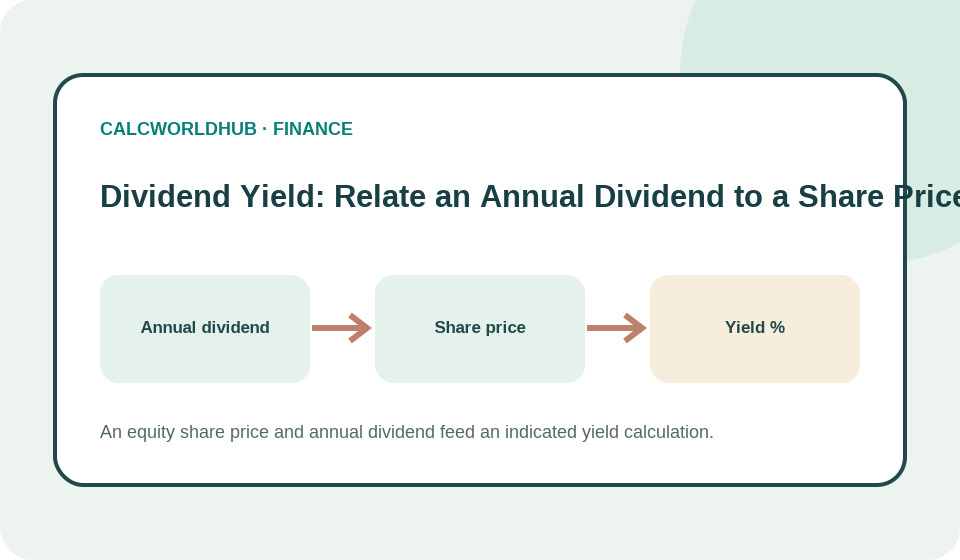
Dividend Yield: Relate an Annual Dividend to a Share Price
Calculate an indicated dividend yield from annual dividend per share and current share price.
Read article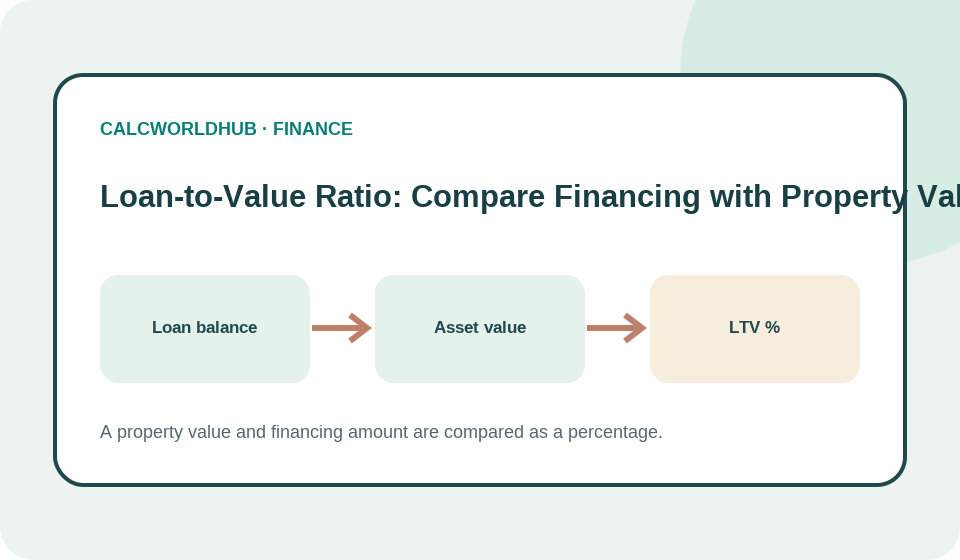
Loan-to-Value Ratio: Compare Financing with Property Value
Calculate loan balance as a percentage of an entered property or asset value.
Read article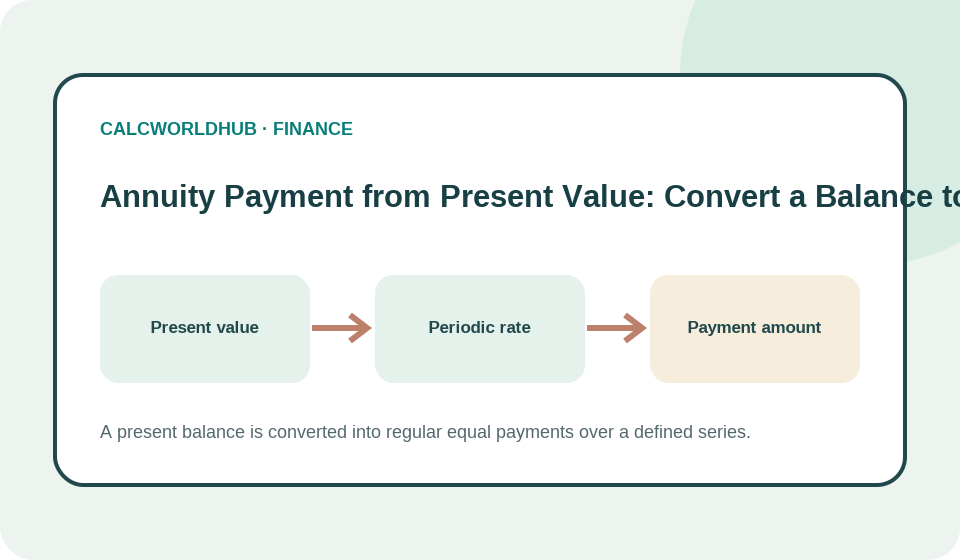
Annuity Payment from Present Value: Convert a Balance to Equal Payments
Calculate equal end-of-period payments that correspond to a present value, periodic rate, and payment count.
Read article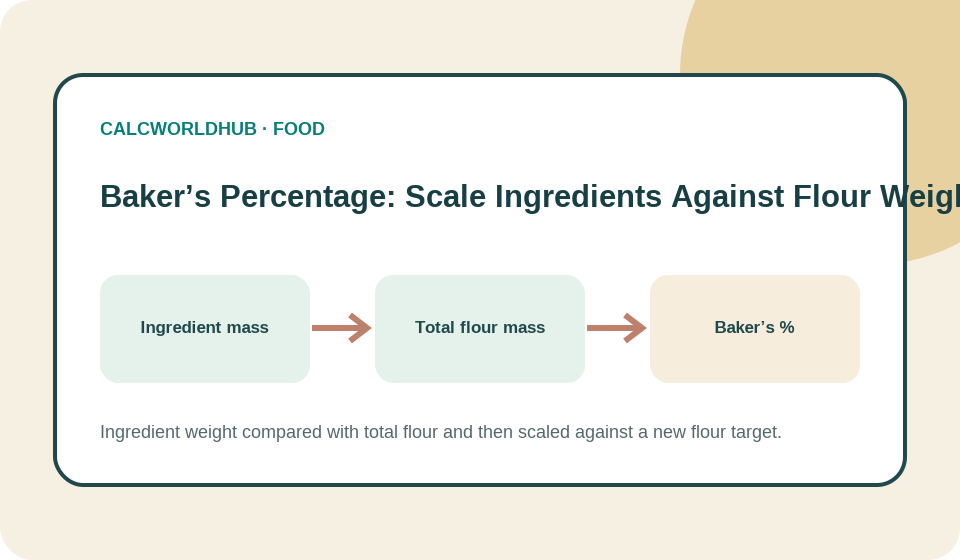
Baker’s Percentage: Scale Ingredients Against Flour Weight
Calculate an ingredient’s baker’s percentage from its mass and the total flour mass, then use the ratio to scale a formula consistently.
Read article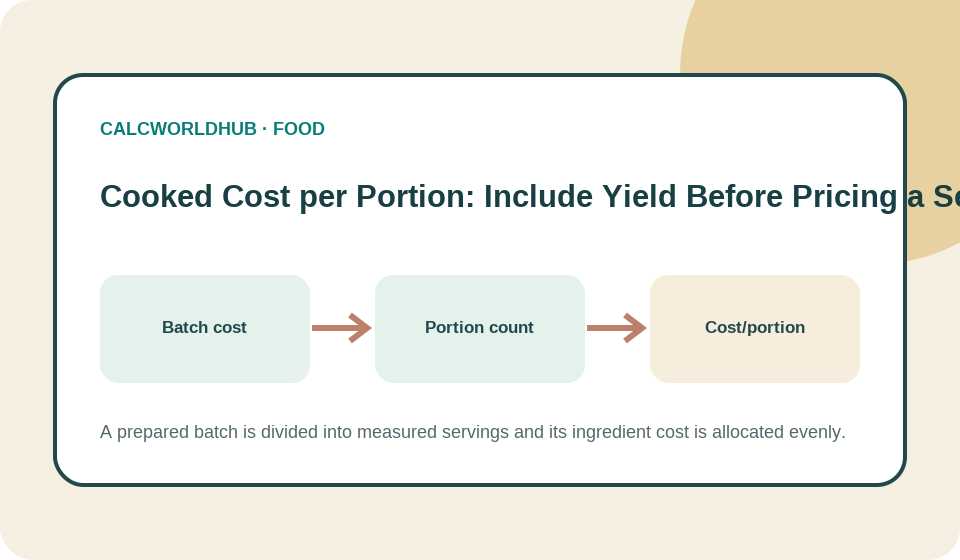
Cooked Cost per Portion: Include Yield Before Pricing a Serving
Divide the ingredient cost assigned to a cooked batch by the number of usable portions to estimate ingredient cost per serving.
Read article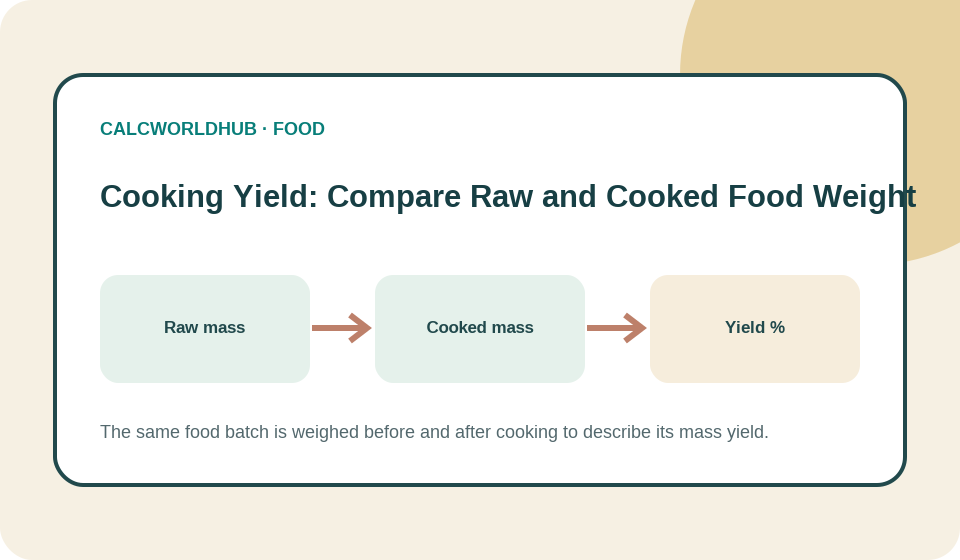
Cooking Yield: Compare Raw and Cooked Food Weight
Express cooked food mass as a percentage of its raw starting mass while keeping the cooking method and product definition clear.
Read article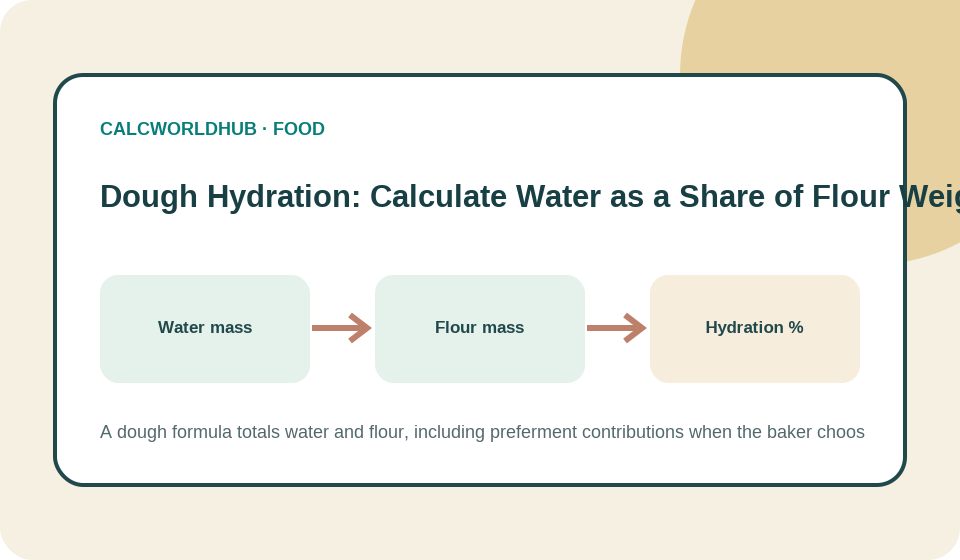
Dough Hydration: Calculate Water as a Share of Flour Weight
Calculate dough hydration by comparing the entered water mass with the flour mass, then state which preferments and liquids are included.
Read article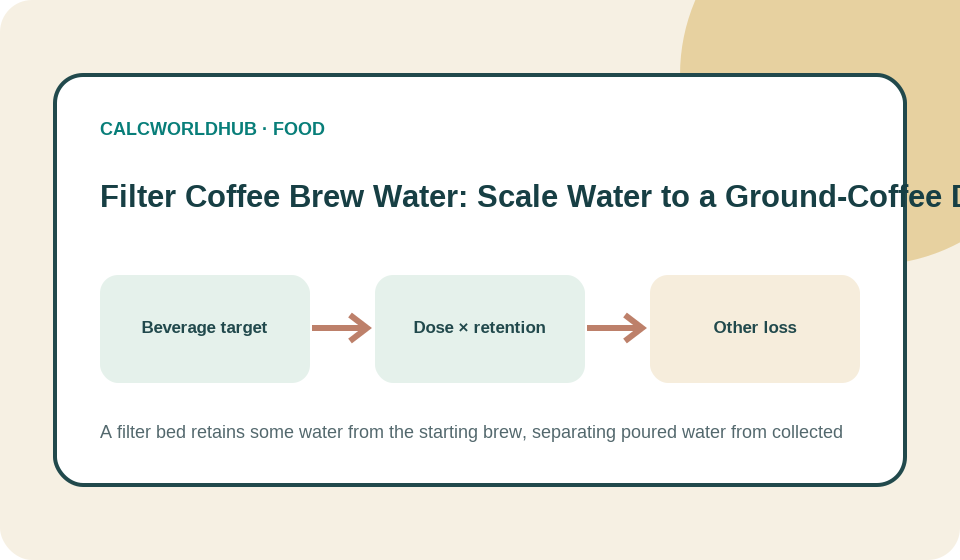
Filter Coffee Brew Water: Scale Water to a Ground-Coffee Dose
Estimate a starting water mass from beverage target, coffee dose, retained water, and other stated losses without predicting extraction or taste.
Read article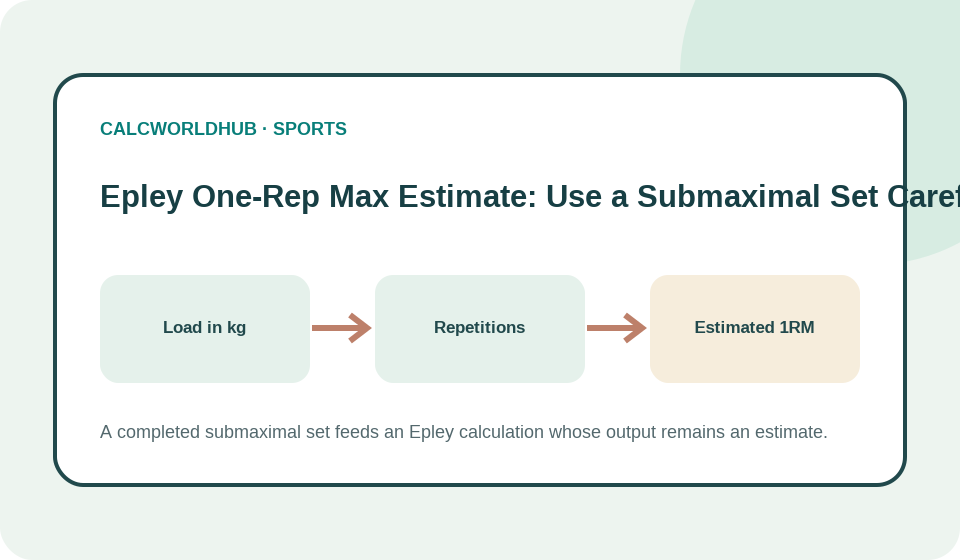
Epley One-Rep Max Estimate: Use a Submaximal Set Carefully
Estimate an Epley one-repetition maximum from a completed lifting set, understand the equation, and see why the result is a planning estimate rather than a tested max.
Read article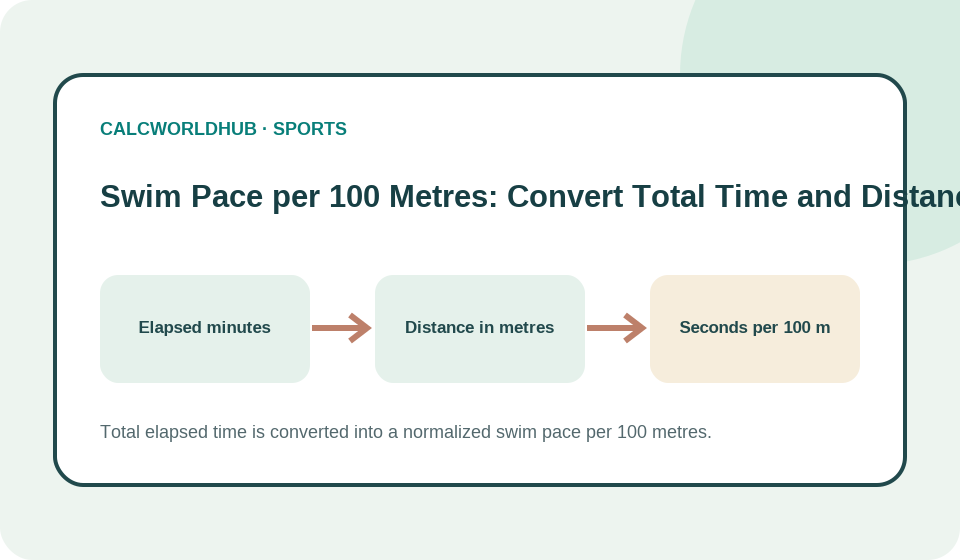
Swim Pace per 100 Metres: Convert Total Time and Distance
Convert an elapsed swim time and distance into average minutes and seconds per 100 metres, then compare swims on a consistent distance basis.
Read article